A gift guide for a quieter place to study or work
John Cage once went into the anechoic chamber at Harvard, a room built to swallow every sound, and still heard two: a high one and a low one. As Cage told it, the engineer in charge explained that the high one was his nervous system in operation and the low one was his blood in circulation.
Perfect silence isn't possible, and the research on reading and studying points at a different problem anyway: talking you can understand is what distracts people most. Echo in the room is another problem, and steady background noise helps some people and hurts others.
Here's a wishlist for a student, a remote worker or anyone trying to concentrate at home, built around those three things: headphones, earplugs, a rug pad, curtains, felt wall tiles and chair pads, a white noise machine, a book of Proust's complaint letters and a tour of the quietest room on record. It runs from wax earplugs and a bag of felt pads up to $249 AirPods Pro and a $400 tour for two, with a $9,690 office phone booth for someday. Pick the items you want with "Add to wishlist," or take the whole list with the button at the bottom:
- Felt pads for the chair legs
- A tour of the anechoic chamber at Orfield LabsMinneapolis, for two$200 per person
Some links above earn WishPoster a commission. As an Amazon Associate, WishPoster earns from qualifying purchases.
Voices you can understand
In a 2019 Bournemouth University study, people read short paragraphs while an eye tracker followed where they looked. Sometimes the room was silent, sometimes there was noise, sometimes English speech and sometimes Mandarin, which the readers couldn't understand. When the speech was in English, their eyes kept jumping back to reread words they'd already read. Silence and the Mandarin didn't cause as much of that. They still understood what they read, as long as they could go back. When the study stopped them from rereading, comprehension dropped.
A 2018 review of 65 studies found that noise, speech and music all slow reading a little, and that speech you can understand and music with lyrics distract the most. With 8- to 10-year-olds, a 2020 study found that how understandable the speech was affected comprehension, and how loud it was affected reading speed.
Noise-cancelling headphones
On April 19, 1978, Amar Bose was on a flight from Zurich to Boston, trying the airline's new headphones, and he was disappointed. He pulled out a pencil and started working on a fix before he landed. In 1986, Bose engineers brought two prototype headsets to Dick Rutan and Jeana Yeager, who were about to fly the Voyager around the world without stopping. Its engines put as much as 110 decibels straight into the crew's ears for 9 days, 3 minutes and 44 seconds, and the prototypes are credited with protecting their hearing.
Noise cancelling still works best on what Bose was fighting. Low, repeating sounds are the easiest to cancel, and higher, less predictable sounds are harder, which is why a voice gets through more than an engine does.
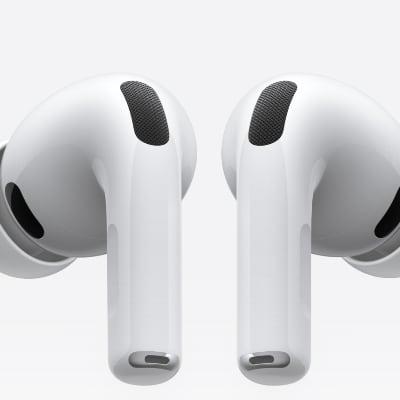
Apple says the AirPods Pro 3 remove up to twice as much noise as the AirPods Pro 2. My office is across from the laundry room, so sometimes I hear Mrs. WishPoster doing laundry. I wear AirPods Pro when I work, often with nothing playing, and they do a great job of keeping the noise from around the house from distracting me. A washer and dryer are the kind of low, repeating sound noise cancelling handles best.
When I do want music, I put on Sound Island, a YouTube channel of hour-plus mixes with no vocals, made for working. Skipping the vocals fits the 2018 review of 65 studies near the top of this post, which found that music with lyrics was one of the two biggest distractions for reading, along with speech you can understand.
Headphones for kids
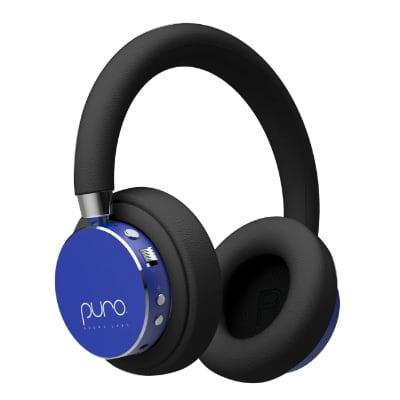
Puro Sound Labs started after the founder's youngest daughter was diagnosed with noise-induced hearing loss as a teenager, partly from listening to her headphones too loud. He set out to make headphones that can't go above 85 decibels. I've never bought kids' headphones, though I probably should have.
Not every kids' headphone with a volume cap actually caps it. In 2016, Wirecutter tested 30 pairs of kids' headphones and earbuds at full volume, and half went over 85 decibels, the workplace limit an audiologist on the project used as the benchmark. The loudest reached 114. Most wired pairs capped the volume with resistors in the cord, and those sometimes failed. Bluetooth was the exception: in Bluetooth mode, said Brent Butterworth, who ran the tests, "it's impossible to make too loud." The BT2200-Plus connects over Bluetooth.
Earplugs
Franz Kafka wrote to his friend Robert Klopstock that things no longer worked without Ohropax, by day or by night. The company has been selling cotton-and-wax earplugs since 1907, and its founder, the pharmacist Maximilian Negwer, got them into the German army's kit: from 1916 they were standard issue for every soldier. Not everyone credits Negwer with an invention, though. One account says he just dropped cotton into melted wax and let it dry.
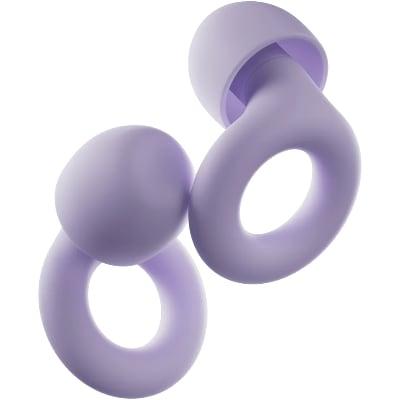
Loop's founders, Maarten Bodewes and Dimitri O, were engineers with tinnitus from going out to clubs, and they tried every earplug on the market before quitting their jobs to make their own in late 2016. They started with concert earplugs. After Covid hit, people started using them for sleep and focus too, and by 2023 Loop's revenue was €126.5 million, about triple the year before. The Quiet 2 is the soft pair, rated to cut noise by 14 decibels, with four tip sizes.
An office phone booth, for someday
Samu Hällfors was in his early twenties, working in an open-plan office, when the noise got to him: "particularly from our boss's phone calls." He and a friend suggested the boss take his calls somewhere else. The boss said, "Well, buy me a phone booth." They built one in a garage, named it Pömpeli, Finnish for "box," and in 2010 Framery launched it as the first commercial office pod. A boss on the phone is exactly the kind of noise the reading research says does the most damage.
The One Compact is a one-person booth that Framery says cuts speech by 30 decibels. It's 88.6 inches tall, so measure the ceiling and the doorways first, and the $9,690 price doesn't include delivery or installation.
Then the echo
The second problem is how long sound hangs around in a room. ANSI S12.60, the US standard for classroom acoustics, allows 0.6 seconds of reverberation in a furnished classroom under 10,000 cubic feet, and 35 decibels of background noise. Hard floors, bare walls and windows keep sound bouncing.
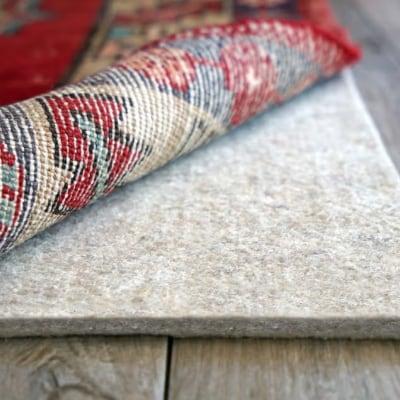
A rug pad
Acoustic testers rate a surface by how much of the sound hitting it gets absorbed, from 0 to 1. In tests reported by the Carpet and Rug Institute, the industry's trade group, carpet laid on concrete rated between .15 and .55. Cut pile did better than loop pile, and a pad underneath added .10 to .20. One cut wool carpet went from .55 to .70 over a thick cushion. If there's already a rug in the room, a thick pad adds to what it absorbs.
RugPadUSA's Eco-Plush is 100% recycled felt with no glues, in thicknesses up to half an inch.
Curtains
I have light-blocking curtains, bought for the light, and I've noticed they also absorb sound and cut down the echo. IKEA's SANELA curtains are heavy velvet that darkens the room without blacking it out. IKEA suggests hanging them from floor to ceiling, overlapping the window frame at the sides to cut down on gaps.
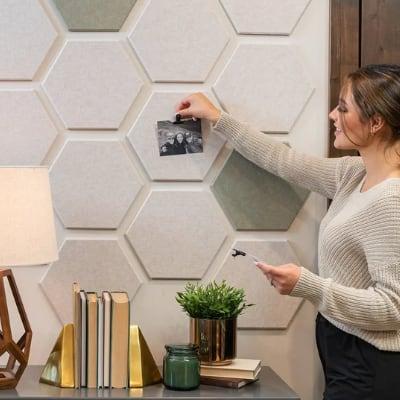
Felt wall tiles
Felt Right is careful about what its hex tiles do. They're "often searched for as soundproof wall panels," its listing says, but they're designed to absorb sound and reduce echo, and covering more of the wall gives a bigger improvement. They'll soften the echo in an office, not stop the sound of a laundry room across the hall. They're pinnable, so the wall behind a desk can be a bulletin board too.
Felt pads for the chair legs
A chair scraping across a hard floor is noise you make yourself. I put felt pads on my chairs, and they made a magnificent difference. This set from X-Protector has 133 pads in assorted sizes.
Steady noise helps some people
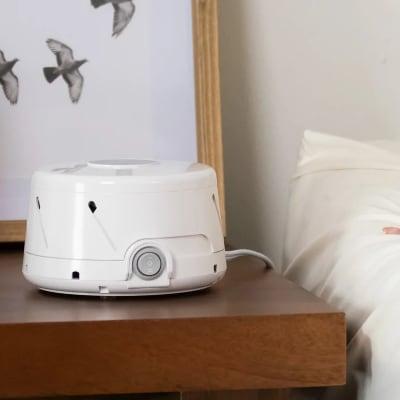
A white noise machine
Trudy Buckwalter slept well with the hum of a hotel room and not at home. In 1962 her husband, Jim, built her a handmade aluminum bowl around a basic fan motor to make the same sound. He patented it in 1963, and the design has sold nearly 6 million units. The Dohm still makes its sound with a real fan, not a speaker playing a recording.
For focus, a 2024 analysis of 13 studies found that white and pink noise gave a small boost on attention tasks to people with ADHD or ADHD symptoms, and a small cost to everyone else. It found no qualifying studies of brown noise at all. This one's for someone who already knows they work better with a fan running.
Real silence
A tour of the anechoic chamber at Orfield Labs
Visitors to the anechoic chamber at Orfield Laboratories hear what Cage heard at Harvard, and more: their heart beating, their stomach gurgling, and for some, their eyelids when they blink. In November 2021 the chamber took back the record for the quietest place on Earth, at -24.9 decibels. Silence that complete isn't restful. "If you're in there for half an hour," Steven Orfield has said, "you have to be in a chair."
The lab is in Minneapolis, in the old Sound 80 studios, where Bob Dylan recorded for Blood on the Tracks in 1974 and Lipps Inc. recorded "Funkytown." Orfield bought the studio in 1990 and added the acoustics lab. The standard tour is an hour and a half with 20 minutes in the chamber, at $200 a person with a $400 minimum, booked by email.
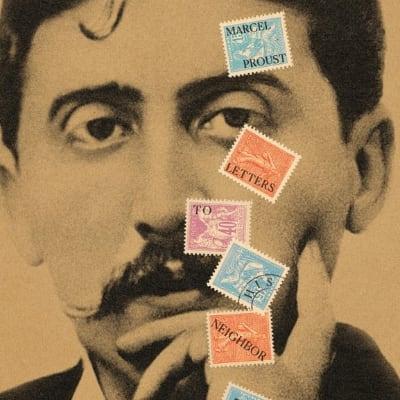
Letters to His Neighbor
Marcel Proust had the walls of his bedroom covered in cork in 1910 to keep the noise out. Upstairs, a dentist named Dr. Williams ran a thriving practice directly above his head. Proust's letters to the dentist's wife, polite and specific about which noises he could stand, are collected in this short book, translated by Lydia Davis. One reads: "This one is quiet while the electrician bangs."
In conclusion
In May 1919, after nine years behind cork walls and about to lose the room, Proust wrote that he wouldn't be able to put the cork up in his new lodgings, and that "it would be better to apply the means of defence to the ears." That's what Kafka was doing with Ohropax, and it's what the headphones and earplugs at the top of this list are for. The list above copies straight into a new WishPoster list with the Reading Corner theme, or start one from scratch.
Ready to make your own wishlist?