What Edgar Allan Poe would have put on his October wishlist
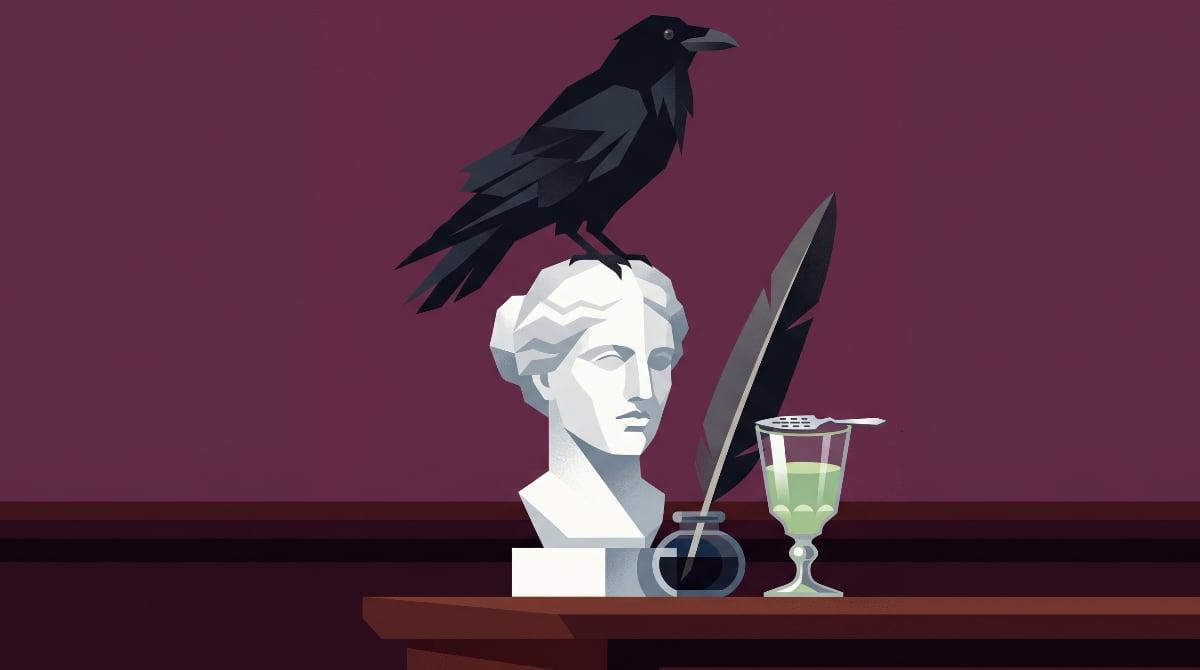
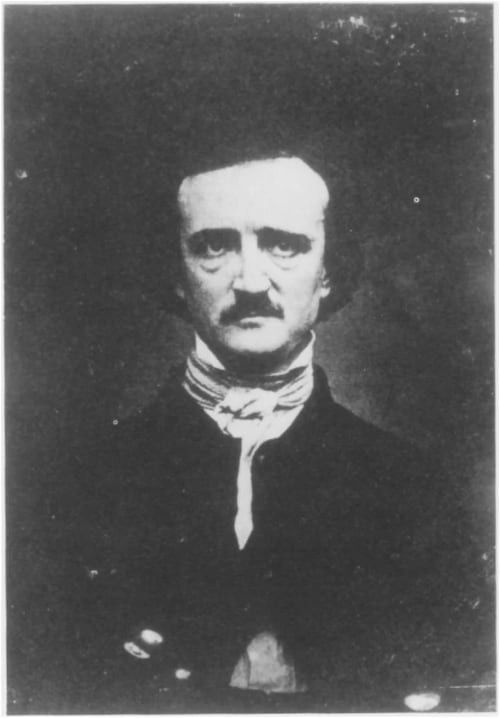
Edgar Allan Poe died in Baltimore on October 7, 1849, at 40. Four days earlier he'd been found delirious at Ryan's Tavern on election day, in clothes that probably weren't his, and he never explained how he got there. His hospital records and death certificate are lost, so people still argue over the cause: cholera, rabies, alcohol, or "cooping," an election scheme where gangs grabbed men off the street and forced them to vote over and over in different clothes.
Between that and Halloween, October is about as Poe as a month gets. Here's the wishlist I think he would have put together. Pick the items you want with "Add to wishlist," or take the whole list with the button at the bottom:
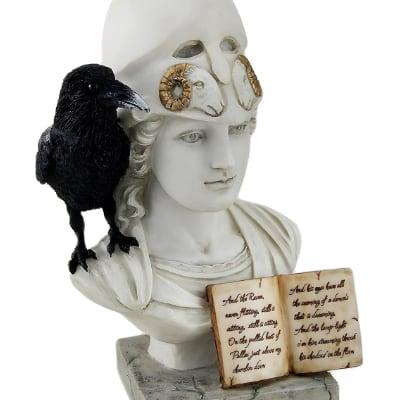 Raven perched on a bust of PallasIt has to be the bust of Pallas. Just above my chamber door.
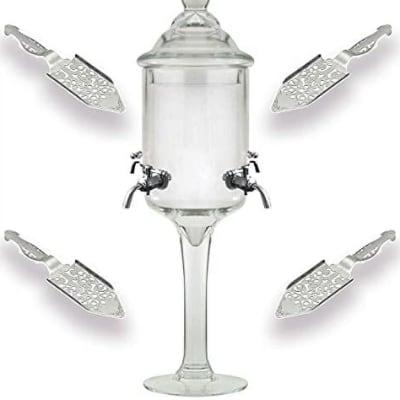 Absinthe fountain set with glasses and spoons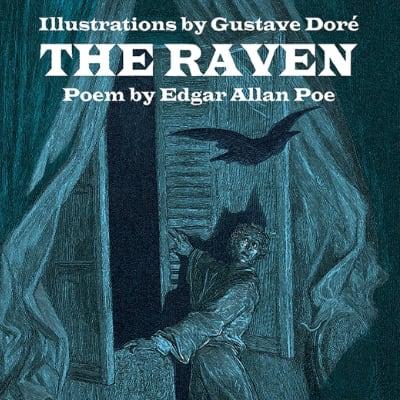
- A half bottle of cognac and three red rosesJanuary 19th. You know where to find me.
As an Amazon Associate, WishPoster earns from qualifying purchases.
In the poem, the raven flies in and settles "upon a bust of Pallas just above my chamber door," and stays there for the rest of it. Poe had another writer's raven to go on. Charles Dickens kept a pet raven named Grip and wrote him into his 1841 novel Barnaby Rudge as a talking bird. Poe reviewed Barnaby Rudge for Graham's Magazine in 1842, and literary historian Edward Pettit counts Grip among the poem's inspirations. Grip bit Dickens's children, got moved out to the carriage house, and died after eating lead paint. Dickens had him stuffed, and he now sits in the rare books collection of the Free Library of Philadelphia.
The quill set is for the magazine Poe never got to publish. He announced it in 1840 as The Penn, then renamed it The Stylus, a pun on Penn and pen, and planned to charge $5 a year, more than other magazines, to pay for better paper and woodcuts. Backers kept pulling out, but in 1846 he still called it "the one great purpose of my literary life," and a fundraising lecture he gave for it in 1848 drew about 60 people. It never put out an issue.
The absinthe needs a disclaimer, because there's no record of Poe drinking it. His reputation as a drunk owes a lot to Rufus Griswold, a rival who wrote his obituary under the name "Ludwig" and then a biography portraying him as a depraved addict, much of it believed to be fabricated. The absinthe belongs to his French fans. Charles Baudelaire translated five volumes of Poe between 1848 and 1865, and a 1909 essay says it is "entirely due to Baudelaire that Poe has become practically a French author." Baudelaire was also, along with Verlaine and Rimbaud, one of the poets who socialized and wrote under absinthe's influence.
The Raven first ran in the New York Evening Mirror on January 29, 1845, and Poe was likely paid about $9 for it. Within weeks it had been reprinted more than 10 times, and it did little for his finances. The edition on the list is Gustave Doré's. He finished the engravings in 1883, the year he died, and Harper & Brothers published them in 1884. The Library of Congress has a copy of that edition, which stands 47 centimeters tall. The Dover reprint fits on a normal shelf.
The last item is a tradition Poe never saw. For decades, someone dressed in black came to his grave in Baltimore every January 19, his birthday, and left three roses and a half-full bottle of cognac. The Baltimore Sun first wrote about the Poe Toaster in 1950. A 1999 note said the job had passed to "a son," and the visits stopped after Poe's 200th birthday in 2009. The roses are generally thought to stand for Poe, his wife Virginia and his mother-in-law Maria Clemm, who are buried with him. Nobody ever found out who the Toaster was.
In conclusion
Take the whole list for the Poe reader in your life, or grab the pieces you want. If there's a historical figure you'd like to see get the wishlist treatment next, send them my way.
Ready to make your own wishlist?