A 2026 gift guide for coffee people, from a little curious to all the way in
In 1957, a biochemist named Earl Lockhart published a chart with a box on it marking the ideal cup of coffee. The Specialty Coffee Association still tests home coffee makers against his numbers.
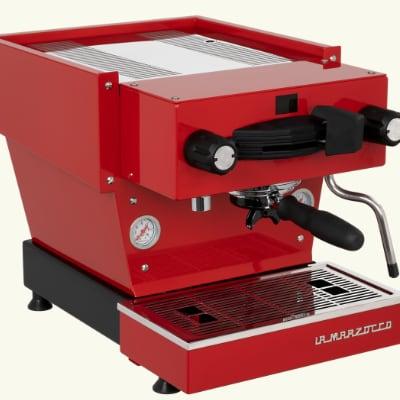
This wishlist is for anyone from a person who has a latte now and then to someone who weighs their beans every morning. On it are seven ways to brew, beans, a grinder, a scale, a kettle, a book, a mug that keeps coffee hot, a poster, a coffee plant, green beans for roasting at home and a Kona farm tour. The listed prices start at $5 for a plastic Melitta cone and go up to $359 for a Moccamaster drip brewer, with a La Marzocco espresso machine for 'someday.' Pick the items you want with "Add to wishlist," or take the whole list with the button at the bottom:
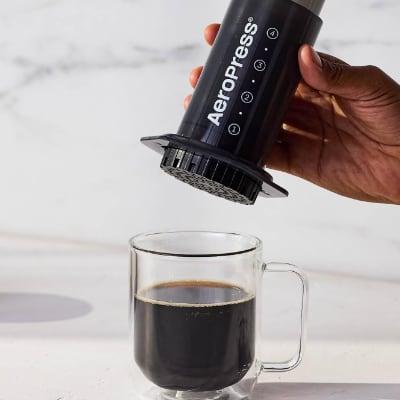 AeroPress OriginalIt comes with filters, but I'd like an extra pack of them too$40
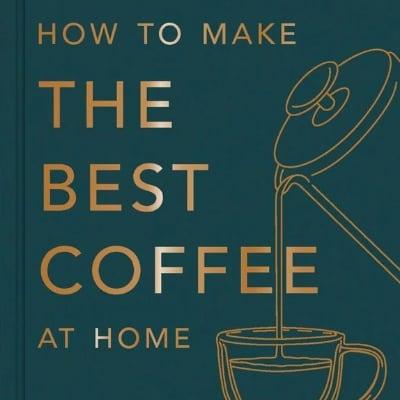 How to Make the Best Coffee at Home by James Hoffmann
- SCA Coffee Taster's Flavor Wheel posterTo hang next to the coffee maker$8.99
- Counter Culture single-origin gift subscriptionOne bag a shipment, for 3 months$20 a bag
- Sweet Maria's green coffee samplerUnroasted. For learning to roast at home.$33.50
- A live coffee plantA small one in the plain grow pot is fine. It takes a few years to flower.$39

Some links above earn WishPoster a commission. As an Amazon Associate, WishPoster earns from qualifying purchases.
The man with the box
Lockhart's 1957 chart measured two things in a brewed cup: the extraction, meaning how much of the ground coffee ended up dissolved in the water, and the dissolved solids, meaning how strong the cup was. He put the ideal at 18 to 22 percent extraction and 1.15 to 1.35 percent dissolved solids. The box is where those two ranges cross. Nobody has written down exactly how he chose them. A UC Davis researcher who has studied the chart says it was built on "a few simple tasting notes."
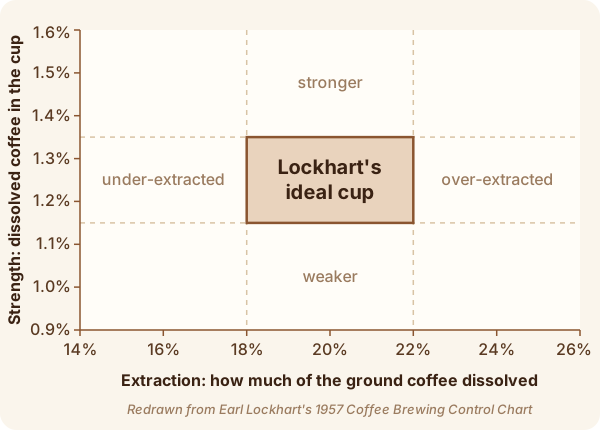
Lockhart had earned a PhD in biochemistry at MIT in 1938, and then gone to Antarctica as the physiologist on Admiral Byrd's 1939-41 expedition, where he made a four-month, 400-mile trip by dog team. In 1955 he left MIT to become research director of the Coffee Brewing Institute, a trade organization in New York. So the ideal cup of coffee, the one the SCA still measures against, was set by a researcher working for the coffee industry.
In 1965 he went to Atlanta as assistant research director of the Coca-Cola Company, and he stayed until 1978. The company launched Coca-Cola with Coffee in the US in January 2021 and discontinued it in November 2022. I bought it a couple of times at convenience stores on a road trip, and haven't seen it since.
For the curious
In 1908, Melitta Bentz, a homemaker in Dresden, was tired of how coffee came out: the brewing sieves of the day clogged, the coffee was often lukewarm, and grounds got into the cup and left an unpleasant aftertaste. She punched holes in a brass cup and lined it with blotting paper from her son's school exercise book. She registered the design with the patent office on June 20, 1908, and she and her husband started with 100 cartons of filter paper and 50 filters, working out of a room in their apartment. The company now makes 50 million coffee filters a day, and the $5 cone on this list is her idea in plastic.
"I came to the richest country in the world, so why are they drinking the lousiest coffee?" Alfred Peet asked after he came to the US from the Netherlands. He opened his own shop in Berkeley on April 1, 1966. In 1971 three young men came to him for help starting a shop in Seattle, and that shop was Starbucks. "We had copied Peet's. The whole place was modeled after what Alfred had done," one of them, Jerry Baldwin, said later. So Starbucks started as a copy of one man's idea of good coffee. Peet wasn't easy to please, either: "If he felt you weren't genuinely interested in coffee, he would freeze you out," the coffee writer Kenneth Davids said.
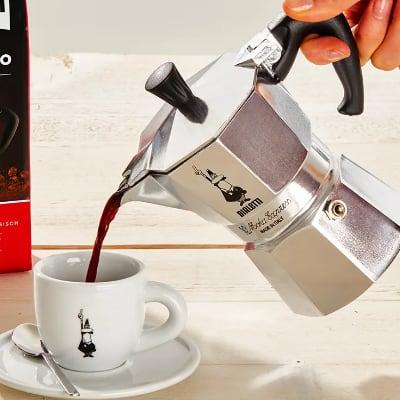
Renato Bialetti took over his father Alfonso's aluminum stovetop coffee pot after World War II and advertised it with a cartoon of a little man with a moustache, drawn by the animator Paul Campani. The little man is still printed on the side of the pot. When Renato died in 2016, at 93, his children buried his ashes in an urn shaped like a giant Moka Express.
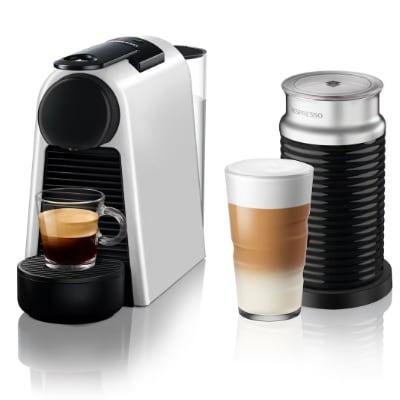
In Eric Favre's own retelling, Nespresso started with a challenge from his wife. Favre, a Swiss engineer, had married an Italian woman, and she told him his country knew nothing about making coffee. "I wanted to prove to my new wife that I have the capacity to make the best espresso," he told The Local. His test for the best espresso in Rome was the busiest café. In 1975 that led him to Caffè Sant'Eustachio, where the barista pulled the lever in several short bursts instead of once, to get more air into the coffee.
Favre worked in Nestlé's packaging department, and he built a capsule system around what he saw. Nestlé didn't want it. Nescafé was selling well, and nobody there saw a need for espresso at home. Nespresso launched in 1986 for offices and hotels, didn't catch on, and switched to selling to households in 1988. Favre left Nestlé in 1991. Today more than half of the coffee capsules bought in the world are based on his invention.
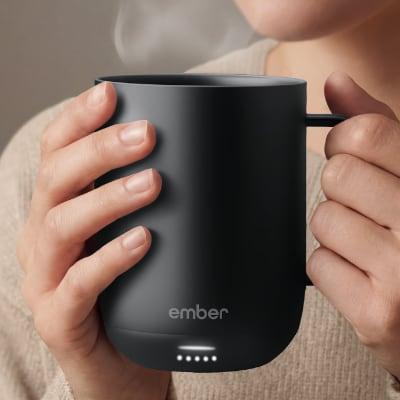
Clay Alexander had already sold an invention to GE that became one of its LED light bulbs when, at breakfast in 2009, his eggs got cold. "I thought, 'OK, I've got to fix this,'" he told CNBC. He built a plate that kept food warm, then switched to mugs. He spent two years pitching Starbucks before it agreed to sell the Ember, and in 2016 it sold about 110,000 in the first six weeks.
For the person who makes coffee every day
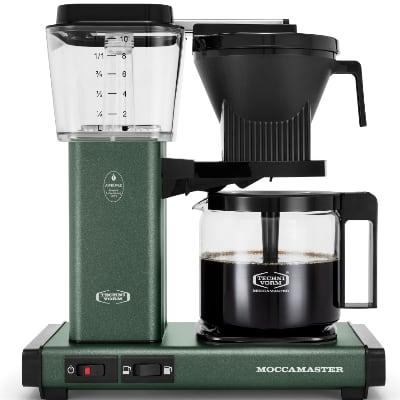
I brew with a drip machine and drink my coffee black. I started taking it black after being a guest in other people's homes: when a host offered coffee and asked how I liked it, milk and sugar meant more fuss for them, so now I just say "black." Drip is also where Lockhart's numbers are still used. To be certified by the SCA as a home brewer, a coffee maker has to heat water to between 197 and 205°F, keep it on the grounds for 4 to 8 minutes, and land the cup in the range from Lockhart's chart. Moccamasters, made by hand in the Netherlands, were among the first certified.
Alan Adler doesn't follow the SCA's temperatures. He tells people to pour water at about 185°F so it brews at about 175°F, because that's the cup most people in his tests said tasted best. "People have this concern that, if they lose a few degrees of temperature, they've lost something important," he said. Adler taught a sensors course to Stanford engineering students and invented the Aerobie, a flying ring that set a Guinness record for the farthest-thrown object at 1,333 feet. Unhappy with home coffee makers, he started on a one-cup brewer in 2003, went through more than 30 prototypes, and launched the AeroPress in 2005.
Fans started a World AeroPress Championship with three competitors, and in 2023 it had more than 5,000. I had an AeroPress for a while and liked it. I only stopped using it because my wife is particular about her drip coffee maker, and we didn't need two ways to make coffee.
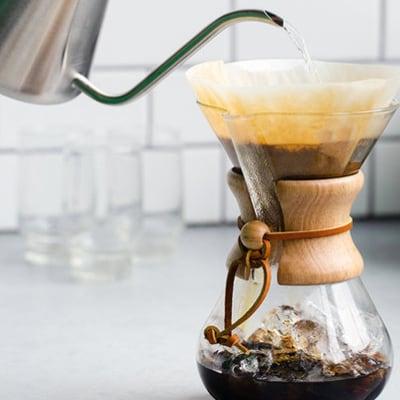
Most of Peter Schlumbohm's inventions were flops, and the German chemist had more than 300 patents. The Chemex, from 1941, was the exception. Gourmet magazine described it as "part chemist's funnel, part Erlenmeyer flask." Schlumbohm liked to boast that with a Chemex, even a moron could make a great cup of coffee. In From Russia with Love, James Bond's coffee is "brewed in an American Chemex," and the real ones are still made by hand in Chicopee, Massachusetts.
"Walk into any Whole Foods right now and look for a single-origin Vietnamese coffee bean. It doesn't exist," Sahra Nguyen told Fortune. The US is the second-largest importer of Vietnamese coffee in the world, and yet the cafés she found serving "Vietnamese coffee" often weren't using Vietnamese beans. She started Nguyen Coffee Supply in November 2018. The kit comes with a phin, a small metal filter that sits on top of the cup and drips the coffee through slowly, and a bag of her coffee. The company sells robusta, a species with nearly twice the caffeine of arabica, from a farm in Da Lat.
James Hoffmann won the World Barista Championship in 2007, co-founded Square Mile Coffee Roasters in London, and has more than 2.3 million YouTube subscribers. His book covers which gear is worth buying, how to use the common brewers (several of them on this list), espresso and home roasting.
For the person who's all the way in
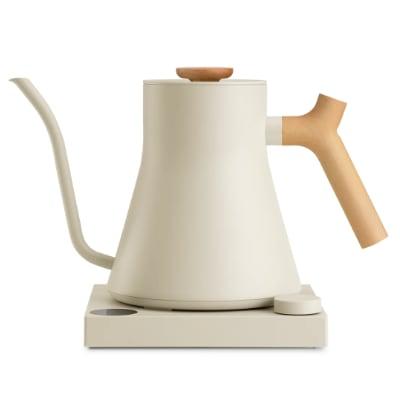
A gooseneck kettle's long, thin spout lets someone pour slowly, which a Chemex needs, and this one holds any temperature from 104 to 212°F. The experts don't agree on temperature: the SCA says 197 to 205°F and Adler says 175°F. A 2020 UC Davis study brewed coffee at 87, 90 and 93°C (about 189 to 199°F) while holding strength and extraction steady, and found that taste was "governed by differences in TDS and PE rather than the brew temperature." TDS and PE, dissolved solids and percent extraction, are the two numbers on Lockhart's 1957 chart. The study never went as low as Adler's 175°F, so it doesn't settle that argument. But within the range it tested, strength and extraction mattered more than temperature, and those are what a scale and a grinder control.
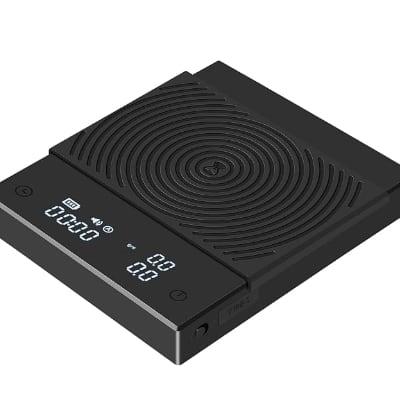
A scale weighs the coffee and the water, which sets how strong the cup is. This one reads to a tenth of a gram, has a timer, and shows how fast the water is going in.
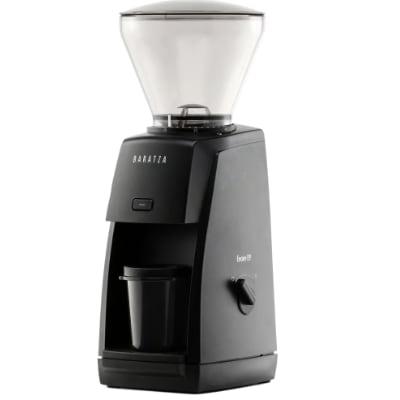
The grind controls the extraction. Baratza started out in the late 1990s planning to import Saeco espresso machines and sell their grinders on the side. "We started selling them and the grinder took off," co-founder Kyle Anderson told Daily Coffee News. The company built its reputation by selling replacement parts at minimal markup and making repair videos, so a broken Encore can usually be fixed instead of thrown away.
Lockhart's chart used a few simple tasting notes. The SCA's flavor wheel, first published in 1995 and redone in 2016 after three years of work with World Coffee Research, draws on a lexicon of 110 flavor attributes. Its makers said, "It's not meant to be a global final word on how to describe coffee."
"Coffee options weren't great in 1997," says Sweet Maria's, and finding green beans to roast at home was hard. Thompson Owen and Maria Troy started selling them that year out of a basement in Columbus, Ohio. The company is in a warehouse in Oakland now. The sampler is 4 pounds of unroasted coffee, in four or eight 1-pound bags from different origins.
A coffee plant can grow indoors with bright light and high humidity. Small white blooms that smell sweet show up three to four years after it's planted.
From 1932 to 1969, Kona's public schools took their long break from August to November instead of in summer, so children could help pick coffee. The Greenwell family has been in Kona since Henry Nicholas Greenwell arrived from England in 1850, and its coffee earned a diploma at the 1873 World's Fair in Vienna, 84 years before Lockhart drew his box. The farm's walking tours in Kealakekua are free, leave every half hour from 8:30 a.m. to 2 p.m., and don't need a reservation.
Rudolph Peterson bought Hacienda La Esmeralda, in Boquete, Panama, as a retirement project. When coffee leaf rust tore through the farm, the family noticed that one variety, Geisha, hadn't been hurt as badly. The farm's Geisha won the Best of Panama competition in 2004. In 2025, a 20-kilogram lot of it set a price record at $30,204 a kilogram, just under $605,000 in all, paid by a café in Dubai. If price is the measure, that's the best coffee in the world, and the 100-gram bag on this list comes from the same farm.
In conclusion
In 2023, UC Davis researchers redrew Lockhart's chart, testing mostly college students, and found two groups of coffee drinkers with different likes and dislikes. The average preference landed in the middle of the chart, but one of the researchers told Fresh Cup it was "more accurate to say that it was the coffee that displeased the least people." So the ideal cup is a compromise, and the coffee person you're shopping for is the only one who knows which way theirs leans. Take the items that fit them, or start a list and let them fill it in.
Ready to make your own wishlist?