A sashiko starter kit wishlist, and the firefighters who hid the art inside their coats
In 19th-century Japan, firefighters wore coats made of several layers of quilted cotton. Before going near a fire they soaked the coat in water and wore it plain side out. The other side, against the body, was dyed with heroes and creatures. That kept the design out of the fire. It also, the thinking seems to have been, put the heroes' protection against the firefighter's skin.
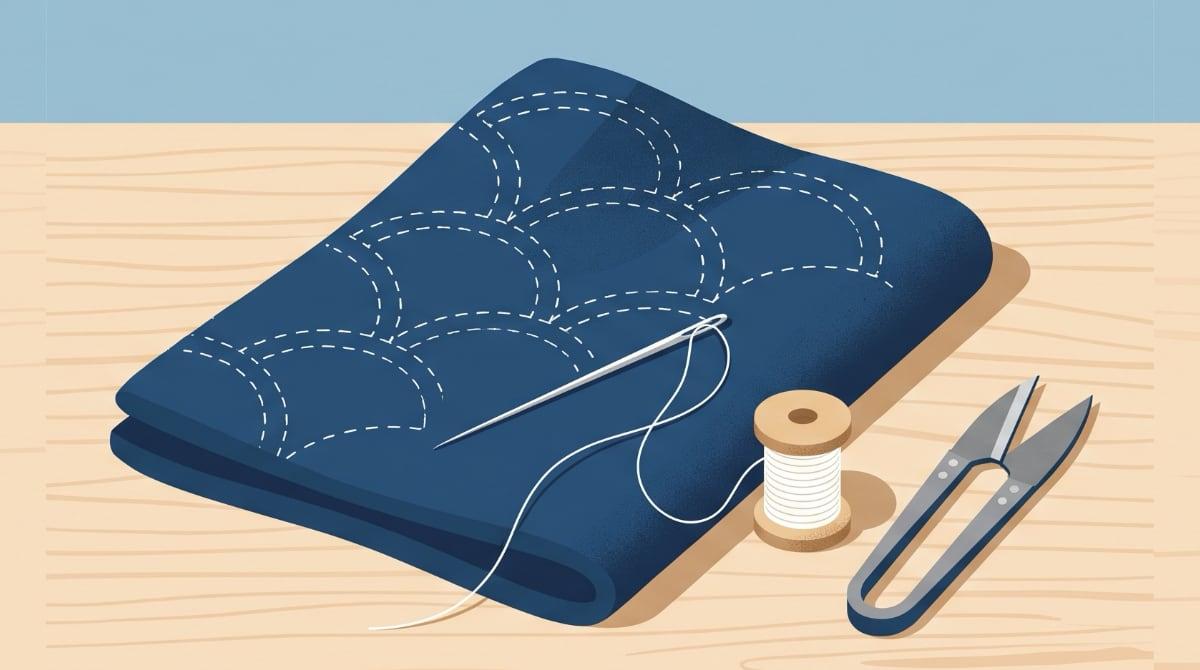
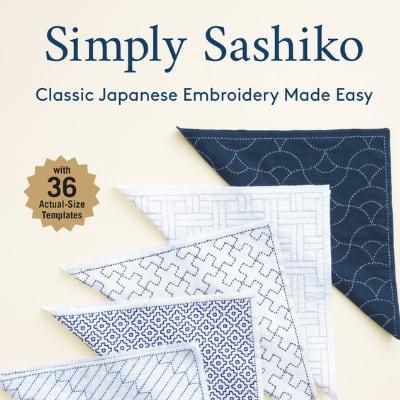
The stitching that held those layers together is called sashiko, a Japanese running stitch, usually white thread on indigo cloth. The word comes from sasu, to pierce.
This wishlist is a starter kit for someone who wants to try it: a pre-printed practice kit, indigo cloth, thread, needles and a palm thimble, a chalk marker, Japanese thread snips, three books and an online class. The listed prices run from $8.24 for a yard of cloth to ¥5,500, about $35, for the snips, with a trip to northern Japan and an antique patched futon cover for someday. Pick the items you want with "Add to wishlist," or take the whole list with the button at the bottom:
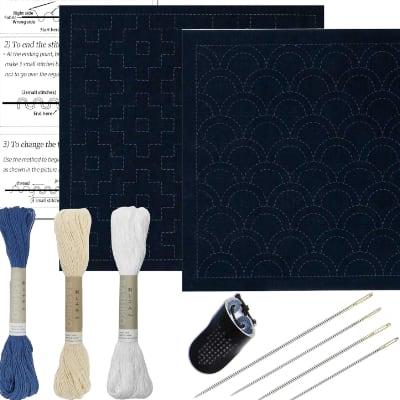 Olympus sashiko starter kitThe pattern's already printed on, so I can start the day it shows up.$26.90
- A komebukuroA patchwork drawstring bag for my scraps. I'd like to sew this one myself.
 Sashiko: The Untold Story by Atsushi Futatsuya
- Mend! by Kate Sekules
- Introduction to Japanese Sashiko Stitching, online class16 lessons, at my own pace.
Some links above earn WishPoster a commission. As an Amazon Associate, WishPoster earns from qualifying purchases.
Why anyone stitched this way
Nobody knows exactly where sashiko started, but the reason for it is easier to see. Cotton wasn't native to Japan, so it was expensive, and a firefighter's coat with several quilted layers used a lot of it. In poorer households, people patched what they had and stitched the patches down.
The komebukuro on this list is that idea at its smallest: a patchwork drawstring bag stitched from worn cloth, made to carry rice or beans to temples and shrines during festivals.
The kit and the cloth
The first thing to sort out is getting a pattern onto the cloth. The Olympus kit has its pattern already printed on, so there's nothing to mark, and it comes with needles, a thimble and a stitching guide in English.
Plain indigo cloth has to be marked first. Erasable pens are popular with quilters, but marks from the FriXion kind can come back when the cloth gets cold, because some of the ink stays in the fabric. Atsushi Futatsuya, a sashiko teacher in Pennsylvania, says "there are no needs to get some special tracing tools" and that a chalk pencil is fine. Chalk shows up on dark cloth, which is why a chalk pen made the list.
A needle that holds 30 stitches
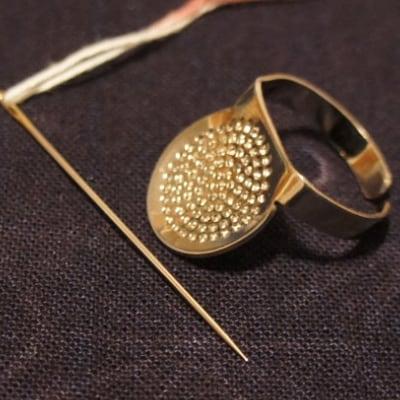
Futatsuya can gather as many as 30 stitches on his needle, which is about 5 centimeters long, before pulling the thread through. The thimble that pushes it isn't for a fingertip: "the round-shape should be on the palm, not on the finger."
The firefighters' coats weren't the only thing with a hidden side. A running stitch has one too. There's "no writing concerning the perfect ratio of stitches in sashiko," but on traditional patterns that vary the stitch length, the most common ratio is about 3:2. The shorter stitch is the one underneath.
Sashiko thread is fine threads twisted into a single, sturdier one. Embroidery floss is the obvious substitute, but Futatsuya, who sells the thread and needles above, says it "may be a bit inappropriate for its purpose."
Needles get a send-off when they break. On February 8 at Awashima Hall at Senso-ji in Tokyo, people bring the ones that bent, rusted or broke while sewing. In the Edo period they were pushed into soft tofu or konnyaku: after a working life in thick, hard cloth, something soft was the tribute.
Are there special scissors?
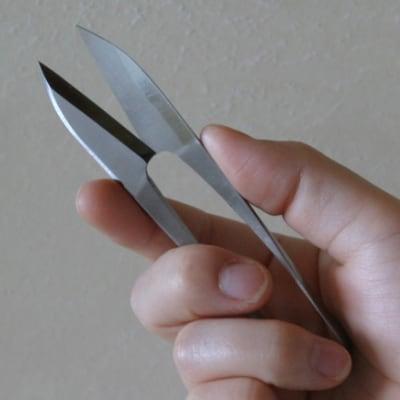
The snips come out of a trade that traces back to the casting of Japanese swords. They're made in Banshu, in Hyogo Prefecture, whose grip scissor output ranks first in Japan. These are the traditional kind, nigiri-basami, one piece of forged steel bent into a U, with no screw. They aren't required, though: any small, sharp scissors will cut sashiko thread, and shipping from Japan adds ¥2,800, about $18.
The man who wouldn't write a how-to
Atsushi Futatsuya grew up in a family that crafted sashiko for a living, teaches it from Pennsylvania, and wrote Sashiko: The Untold Story, which isn't a manual. His reason: "another step-by-step guide would not address what I believe is often missing." What's missing, to him, is why people stitched at all. For the step-by-step, he teaches the 16-lesson Domestika class, and runs a $358 online class with a kit when there's a spot open.
The stitch that came out of a ban
The Hirosaki Kogin Institute, in Aomori Prefecture in northern Japan, still makes kogin-zashi by traditional methods. Entry is free, it's closed on weekends, and visitors can watch the artisans and stitch a coaster, with an interpreter if they don't understand Japanese.
The stitch came out of a ban. Peasants in the Tsugaru region around Hirosaki weren't permitted to wear cotton cloth, though sources differ on the dates. They wore hemp, and stitching white cotton thread onto it to reinforce the loose weave defied the laws. Over time the stitching became patterns built by counting the threads of the weave, and a way around a law became the region's own style.
Boro, and the mirrors
Boro means "rags" or "tatters." It's what happened to bed covers and clothes that were patched for decades, with repairs layered upon each other. Some were reworked so often that the original fabric can no longer be seen. It was made anonymously and mostly by women, for the men in the family with the hardest physical work. The antique cover above links to Sri, a Brooklyn gallery that sells antique Japanese textiles by appointment.
Chuzaburo Tanaka, an ethnologist from Aomori, started collecting it after the war, when cotton got easier to buy and boro began to disappear from daily life, because he feared losing the stories in it. His 30,000-plus items stocked Tokyo's Amuse Museum until it closed in 2019. When 50 pieces came to the US for the first time, at Japan Society in New York, the curator, Yukie Kamiya, called it a creation for survival: "It's nothing about the aesthetic or some artistic beauty." The show treated it as art anyway, "with the seriousness afforded Old Master oil paints," and hung some pieces over mirrors to show the insides, the side nobody sees when a garment is worn.
In conclusion
When the fire had been defeated, and on festival days, a firefighter's coat was turned around and the image was revealed. Visible mending, the subject of Mend! by Kate Sekules, is repair that's meant to show, and it doesn't wait for the fire to go out. As one review of the boro show put it, "Far from hiding the mend, let it shine." Start with the kit, or copy this list and add whatever else you'd want for mending.
Ready to make your own wishlist?