A retro handheld gaming wishlist, and the dim green screen that beat color
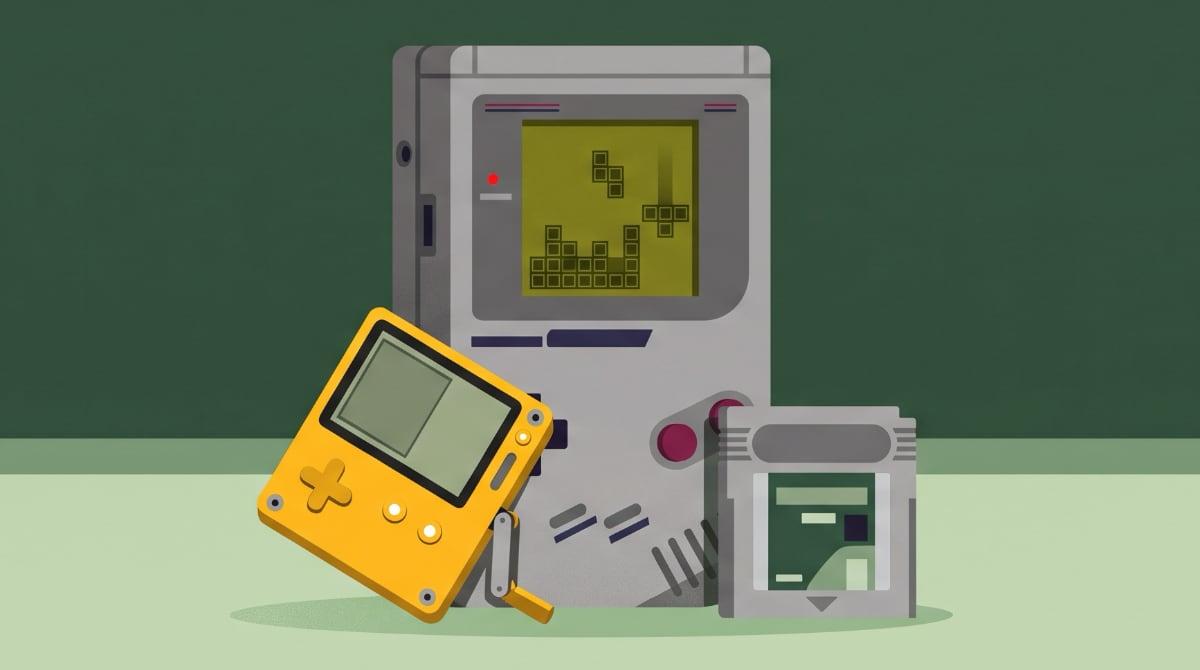
When Nintendo designed the Game Boy, color screens already existed. Gunpei Yokoi, whose team built it, said later, "The technology was there to do color. But I wanted us to do black and white anyway." What he got was a small, greenish screen with no light behind it, and it beat the two color handhelds that came out against it. Thirty-seven years later, people are still lighting that screen, copying it and choosing it all over again.
This wishlist is for someone who grew up with a Game Boy or an Atari, or who just likes old games: three handhelds, Nintendo's library of Super NES games and its controller, a backlight kit for an original Game Boy, a documentary about Donkey Kong, two books full of photos, a day at a museum of play and a day at Super Nintendo World. The listed prices run from $19.99 for a year of Nintendo Switch Online to $239.99 for the Analogue Pocket, with an original Donkey Kong arcade machine for someday. Pick the items you want with "Add to wishlist," or take the whole list with the button at the bottom:
- Super NES controller for Nintendo SwitchMembers can buy it from Nintendo's store$34.99
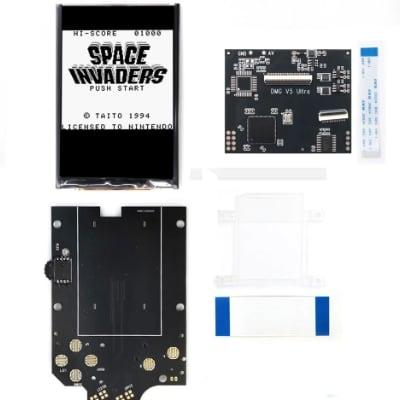 IPS backlight kit for an original Game BoyThe Hispeedido V5 kit. Needs a little soldering$60.99
- A day at Super Nintendo WorldThe one at Epic Universe in Orlando, for the Donkey Kong mine carts$139+
- An original Donkey Kong arcade machineSomeday
Some links above earn WishPoster a commission. As an Amazon Associate, WishPoster earns from qualifying purchases.
Black and white on purpose
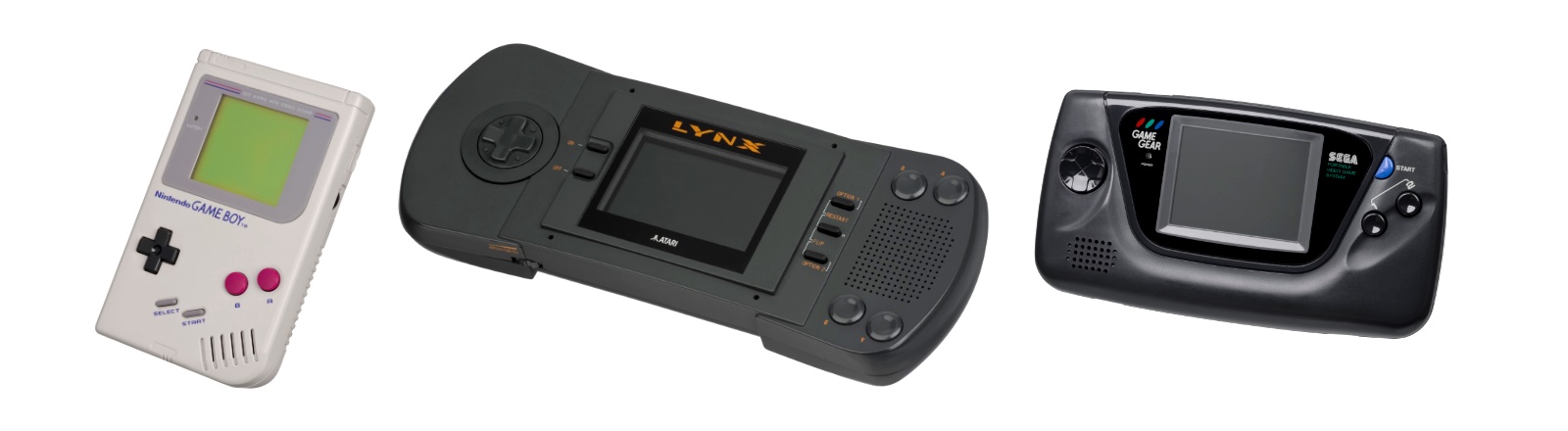
The Game Boy, the Atari Lynx and the Sega Game Gear, roughly to scale. Photos by Evan Amos, Wikimedia Commons (1, 2, 3), public domain


Critics scoffed at the Game Boy's "insipid LCD screen and lack of backlight," and both of its rivals had what it didn't: a backlit color screen. When Yokoi heard about a competitor, his first question was whether its screen was color or monochrome. Told it was color, he said, "Then we're fine."
A backlit color screen took a lot of power. As Yokoi's interviewer put it, "Color screens also drained the batteries very quickly too." Atari's Lynx came out in September 1989 for $179.99 and got 4 to 5 hours out of six AA batteries. Sega's Game Gear cost $149.99. I never had one, but I'd heard it chewed through batteries: six AAs got it about 3 hours.
Batteries weren't the only problem. The Lynx was big enough to be "cumbersome to carry" and short on good games, and many of the companies that could have made Game Gear games were tied up with Nintendo. The Game Boy, meanwhile, was built by "downgrading every component to the barest minimum" so it could "massively undercut the competition." It came out in North America on July 31, 1989, for $89.95, half the Lynx's price, with Tetris in the box. I never owned one, but whenever I got the chance to borrow one, I played Tetris on it more than anything else.
The Game Boy that kept playing Tetris
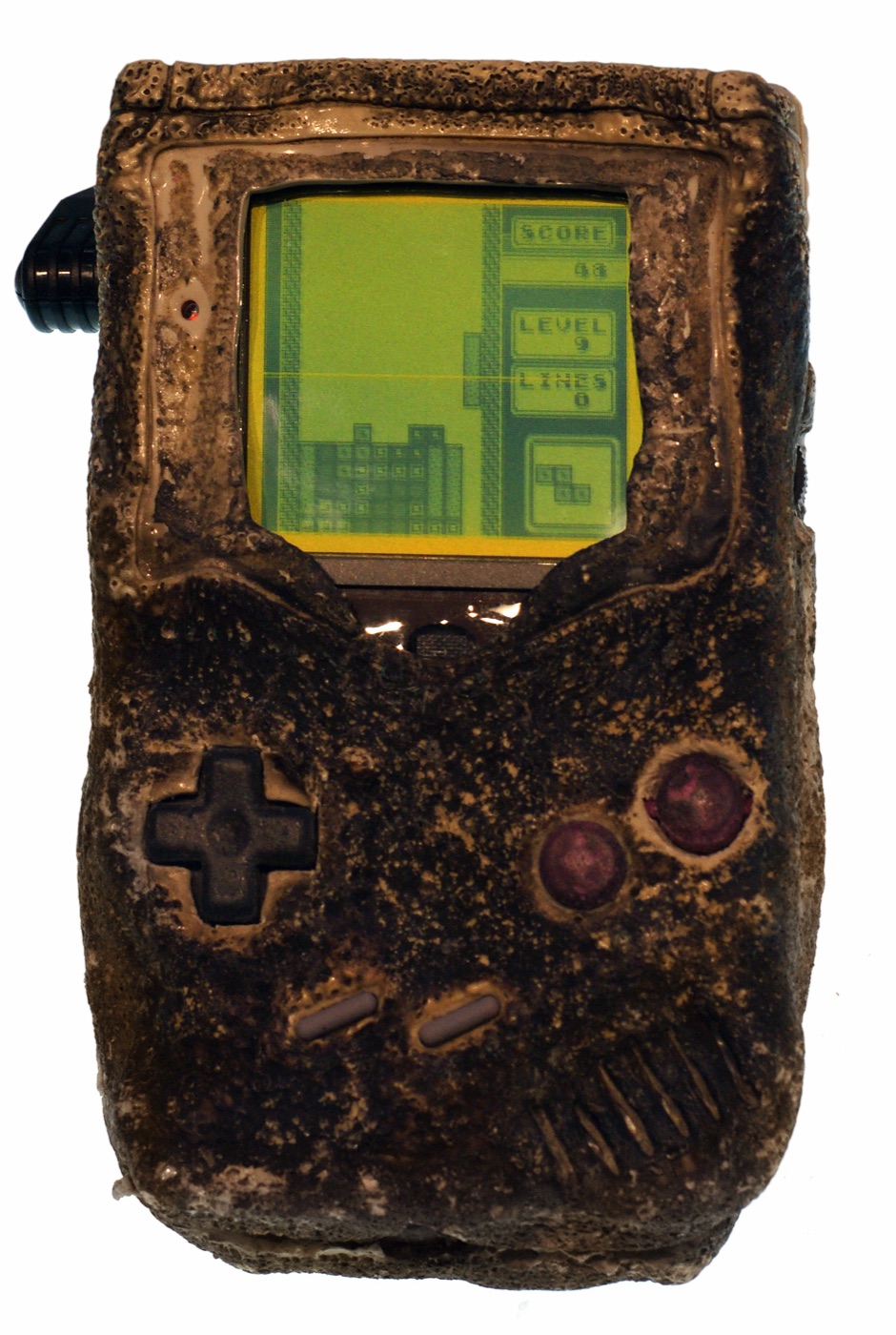
Stephan Scoggins's Game Boy, when it was on display in New York. Photo by Evan Amos, Wikimedia Commons, public domain

Stephan Scoggins, an Army nurse, took his Game Boy to the Gulf War. It came back from a fire looking like the photo above, and he mailed it to Nintendo asking for a replacement, with a letter saying it had been his "comforter, playmate and rejuvenator." "We thought it was a goner," Nintendo's technicians wrote. They put in a Tetris cartridge and a battery pack anyway and heard its "distinctive 'Ping!'" The fire had melted the A and B buttons, but the game played. Nintendo sent him a new one as a "Desert Storm courtesy."
How the fire started depends on who's telling it. Nintendo's display card said the Game Boy was "damaged when barracks were bombed," but Scoggins told The Verge in 2023 that it wasn't exactly bombed. His tent burned, and an explosion nearby had nothing to do with it. He thinks the two got mixed together into the bombing story. Either way, the Game Boy sat in Nintendo's New York store, still running Tetris, until 2023, when it went back to Nintendo's headquarters in Redmond, Washington.
Lighting it up
Nintendo didn't put a light behind a Game Boy screen until 1998, with the Game Boy Light, which only came out in Japan. Its batteries lasted about 12 hours with the light on and 20 with it off, so the light cost about 40 percent of the play time.
To light an original Game Boy now, the fix is a new screen. The kit on this list swaps the old screen for a lit IPS panel the same size, and the contrast wheel becomes a brightness control. Through an on-screen menu, it can also make the new screen look old again, with 36 colors and a "scanline" effect. It only fits an original Game Boy, the speaker has to be soldered back on and some shells need a little trimming, so it's for someone who still has one and can solder.
Quirks and all
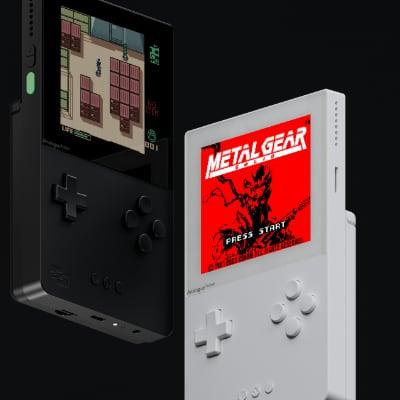
The Lynx and the Game Gear lost to the Game Boy, and now their cartridges play on a device that imitates its screen. With adapters sold separately, the Analogue Pocket plays Game Gear and Atari Lynx cartridges, plus Neo Geo Pocket and TurboGrafx-16 games. Out of the box it plays original Game Boy, Game Boy Color and Game Boy Advance cartridges.
Its screen is 3.5 inches and 1600 by 1440 pixels, ten times the resolution of an original Game Boy. Analogue uses that resolution to imitate the old screens, "Quirks and all": the pixel grid, the LCD's subpixels and, for the later models that had one, the backlight. Each adapter comes with display modes for its own system, so the Lynx and Game Gear games can look like they did on their own screens, too.
Black and white again, with a crank
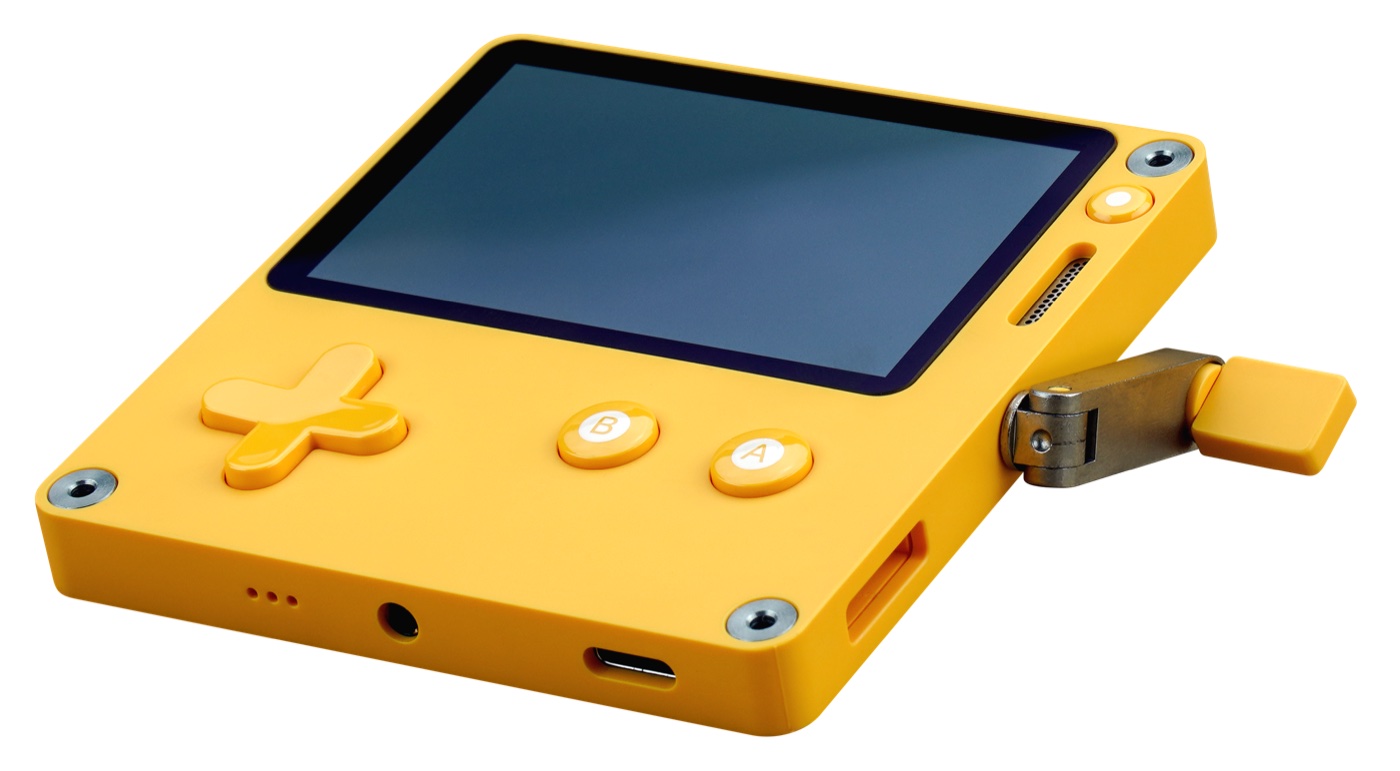
Playdate with its crank out. Photo by Louiemantia, Wikimedia Commons, CC BY-SA 4.0

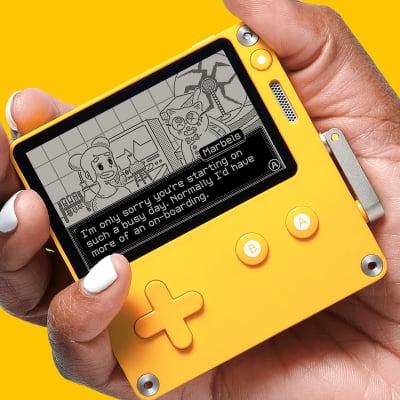
In 2022, Panic, the company that published Untitled Goose Game, started shipping a handheld with a black-and-white screen and no backlight. The Playdate's screen is 400 by 240 pixels, one bit per pixel, and "super reflective", so like the Game Boy it needs light from the room. It's a Sharp Memory LCD, where each pixel keeps its state without being redrawn, which saves power. Yokoi's team cut costs with their screen, but this one is expensive. Panic's Neven Mrgan said so in 2019 and gave the reason: "we like its unique look, and making something different is our motivation!" Expensive screen and all, the first 20,000 sold out in 20 minutes of preorders.
To me, it has a retro feel in a new body, with games for people who liked playing a Game Boy back in the day. It comes with Season One: 24 games, two a week for 12 weeks. Panic designed the body with the Swedish electronics company Teenage Engineering, and the new part of it is the crank, which folds out of the right side. Some games use the crank as a control. Panic's own page points out that it doesn't charge the battery.
Atari's lit screen, with a battery that recharges
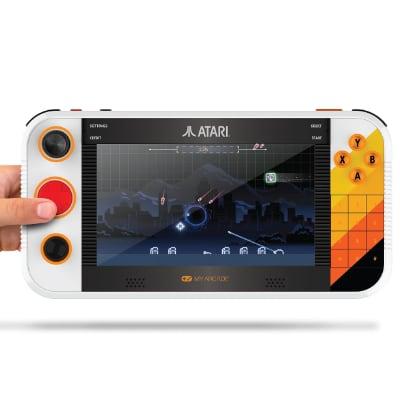
The Atari Gamestation Go, made with My Arcade, has a 7-inch backlit color screen and is rated for about 4 hours. That's about what the Lynx got from six AAs in 1989. This time the battery is built in and recharges, and in Notebookcheck's testing it lasted up to 7 hours.
It has 200 games built in, including Atari 2600, 5200 and 7800 games and arcade games like Tempest and Missile Command. Centipede alone is on it in five versions. Next to the D-pad and buttons are a trackball, a paddle and a keypad, the controls those games were made for. The reviewer found the trackball "remarkably precise" and wrote that "playing Breakout with the paddle feels far better than with any other input method." They gave it 7 out of 10, and added that "dedicated Atari fans can add a point, while general retro gamers might want to subtract one or two."
Super NES games without the cartridges
Nintendo's Super NES Classic Edition, with 21 games built in, sold more than 5 million and was discontinued after the 2018 holiday season. The way to play those games now is a Nintendo Switch Online membership, which includes a library of NES, Super NES and Game Boy games. One of them is Star Fox 2, which never came out on a cartridge at all: Nintendo canceled it near the end of development in the 1990s. It was first released on the Super NES Classic in 2017 and joined the Switch Online library in 2019. Members can also buy a wireless Super NES controller for the Switch, shaped like the original.
The King of Kong
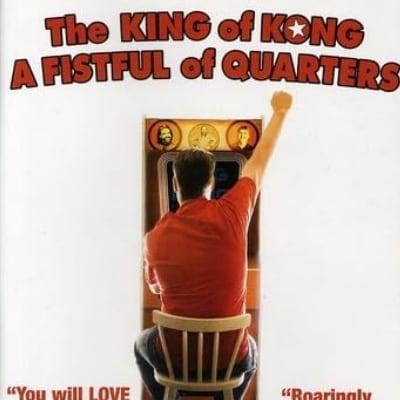
The King of Kong: A Fistful of Quarters is a great documentary from 2007. It follows Steve Wiebe, an out-of-work engineer in Redmond, Washington, who bought a Donkey Kong arcade machine and set out to beat the world record held by Billy Mitchell.
The contest went on long after the film. In 2018, Twin Galaxies, which keeps the arcade records, removed Mitchell's scores and recognized Wiebe as the first person to score over a million points. Mitchell sued Twin Galaxies, and they settled in 2024. Twin Galaxies now lists his scores on a separate historical leaderboard.
Two books with lots of pictures
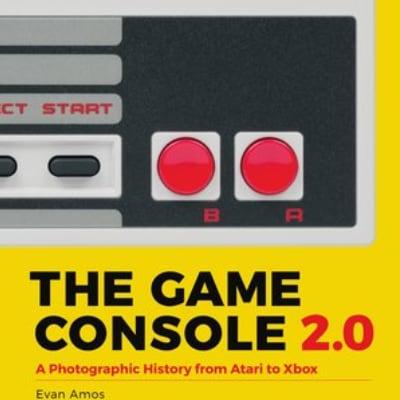
Evan Amos was annoyed by the poor photos of game consoles on Wikipedia, so he started photographing his own and releasing them into the public domain. They've since been used widely in print, on TV and online, usually without his name on them. The photos of the Game Boy, the Lynx, the Game Gear and the Gulf War Game Boy in this post are his. The Game Console 2.0 is his book of them: more than 100 consoles over nearly five decades, with photos of their insides, too.
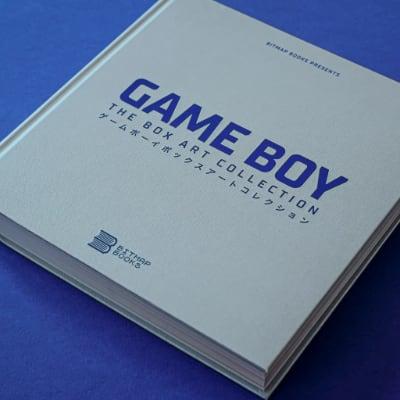
Game Boy: The Box Art Collection, from Bitmap Books, gives each of more than 350 Game Boy games a page, with a photo of its box, a short review and a row of screenshots. It's 372 pages.
Places to go
When Amos is done photographing a console, he donates it, and one of the places it goes is The Strong National Museum of Play in Rochester, New York. The Strong also runs the World Video Game Hall of Fame. Tetris was in its first class, in 2015, and Donkey Kong joined it in 2017.
Parts of The King of Kong were filmed at Funspot, an arcade in Laconia, New Hampshire, including a live game of Donkey Kong that Steve Wiebe, the challenger in the film, played there. Funspot's third floor is the American Classic Arcade Museum, a nonprofit that Gary Vincent, a Funspot employee, started in the late 1990s to preserve coin-operated games. It keeps about 250 of the original machines on the floor at a time, for people to play.
Donkey Kong, the game Wiebe was playing, was Mario's first appearance in a video game, in 1981, when he was sometimes called Jumpman. Nintendo made it to use up a warehouse of unsold arcade cabinets from a game called Radar Scope that had flopped. Mario now has his own theme park lands. Super Nintendo World opened at Universal Studios Japan in 2021 and at Universal Studios Hollywood in 2023. The one at Epic Universe in Orlando, which opened in May 2025, is the first in the US with a Donkey Kong Country area. Its ride, Mine-Cart Madness, is a coaster whose carts seem to jump the gaps in broken track, like the mine carts in the Donkey Kong Country games. One-day Epic Universe tickets run $139 to $199 in 2026, depending on the date.
In conclusion
In the interview where Yokoi said he wanted black and white anyway, the batteries were his interviewer's point. His own reason was different. If you draw two circles on a blackboard and say it's a snowman, he said, everyone sees white snow. He'd played Famicom games on a black-and-white TV, and "once you start playing the game, the colors aren't important."
Pick the items you want, or take the whole list and add your own. It comes in the Pocket Pixels theme, a green screen with a pixel cat hopping bushes.
Ready to make your own wishlist?