A 2026 gift guide for storage worth showing off

Simone Giertz noticed that most people don't have a place for clothes they've worn once. They aren't dirty enough to wash or clean enough to put back in the drawer, so they go on a chair. She didn't try to get rid of the pile. She designed a chair for it.
Several things on this wishlist started the same way, with someone who looked at a pile of books, coats or pots and made the pile part of the design. The list is for someone who'd rather have storage people ask about than storage nobody notices. It covers clothes, books, coats, the junk drawer, spices, wine, jewelry, toys and a Christmas tree. The prices run from a $24.99 IKEA pegboard to a bookcase that starts at $1,148, with an antique Japanese staircase chest and a Louis Vuitton trunk for someday. Pick the items you want with "Add to wishlist," or take the whole list with the button at the bottom:
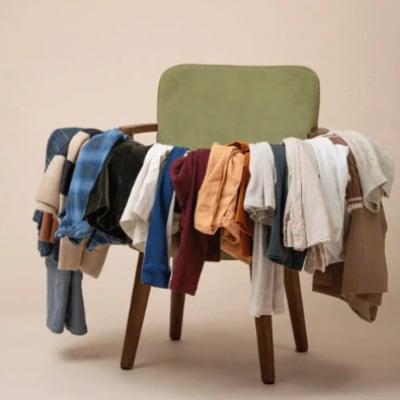 Yetch Laundry ChairGreen. It ships from December, so this one's for after Christmas.$1,100
 Opinion Ciatti Ptolomeo bookcaseThe tall one, for the books stacked on my deskFrom $1,148



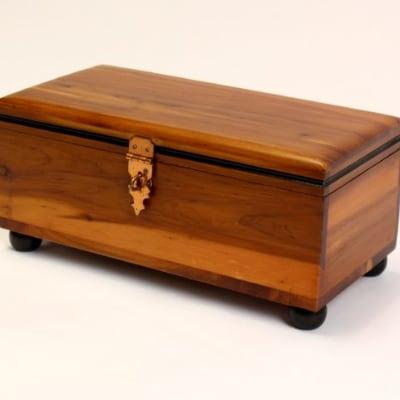 A vintage Lane miniature cedar chestFor earrings. Any year, from Etsy or eBay.
As an Amazon Associate, WishPoster earns from qualifying purchases.
A chair for the chair pile
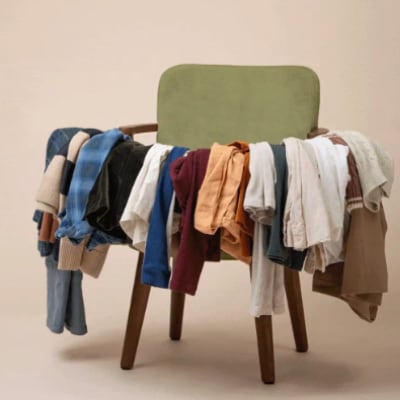
The usual answer for half-worn clothes is a valet stand. Giertz, a Swedish inventor and YouTuber who started Yetch Studio in 2022, went with what people already use: the chair. "I just love the idea of not designing for the perfect day, but for the normal day," she told Core77.
Her chair has a rail that holds at least 10 garments. It sits on a ball-bearing lazy susan, so it swings around the seat. It also swings "out of sight behind the chair," according to Yetch's page, so the pile gets a place without always being on show.
Yetch had a storage problem of its own before the chair. Its first furniture piece "didn't sell as well as we hoped it would," Giertz told Kickstarter, and "we ended up racking up really high storage fees at our fulfillment center." So for the chair, she took orders on Kickstarter first, enough to meet the factories' minimum, before making any. 1,281 people backed it and pledged $1.26 million. Chairs ship in batches starting in December 2026, and US delivery takes up to 15 days after that, so one ordered now probably won't arrive by Christmas.
A bookcase made of the pile

Bruno Rainaldi, who designed the Ptolomeo, started from a pile too. As Opinion Ciatti tells it, he had "piles of books on the studio tables, too many to do the dusting," and more on the bedside table and the floor beside the bed. Instead of a case to put them in, he made a narrow column with small shelves, and "the shelves gradually disappear as the column is filled with books." The tall freestanding version holds about 35 books, and once it's full, it looks like a stack of books standing on its own, which is the thing he'd been looking at on his tables.
He named it for Ptolemy I Soter, who founded the Royal Library of Alexandria. Ptolomeo won the Compasso d'Oro design award in 2004 and became the company's best-selling piece. Each one is signed on its base.
Off the floor and onto the wall
The Shakers dealt with the pile by putting nearly everything on the wall. Their buildings had wooden peg rails on all four walls for clothes, chairs, hats and baskets. To clean the floor, they hung the chairs on the pegs, often upside down "so that dust wouldn't gather on the seat," Lesley Herzberg, the curator at Hancock Shaker Village, told CBS. One saying attributed to their founder, Mother Ann Lee, is "There is no dirt in heaven."
Julia Child kept her kitchen on the wall too. Her husband, Paul, designed her Cambridge kitchen in 1961. He made the counters high for her six-foot-two frame and put her gadgets and copper pans on a custom pegboard. She called herself "a gadget freak," labeled nearly everything with masking tape and marker, and kept her utensils in crocks marked "spoonery" and "forkery."
Neither of them meant to put anything on display. Herzberg says the Shakers "weren't thinking of it as being beautiful, but they were thinking of it as being functional." Other people did it for them. A Shaker chair sold for $88,000 in 1987. Sister Mildred Barker, who lived in the last Shaker community, at Sabbathday Lake in Maine, said, "I don't want to be remembered as a chair." When Child moved to California in 2001, she gave her kitchen to the Smithsonian, which hung everything back on the pegboard exactly where she'd kept it.
A peg rail is the easy part of the Shaker look to own. June Home Supply sells an oak one.
Gneiss Spice puts the spice drawer on the wall. It started in 2009 in a small Brooklyn apartment, after its founder, Beth, found magnetic spice tins with plastic tops that reviewers said "were not airtight, difficult to open, and had to be replaced often." Her jars are thick glass that hang by their magnetic lids, and they're assembled by hand in Maine.
The junk drawer on the wall
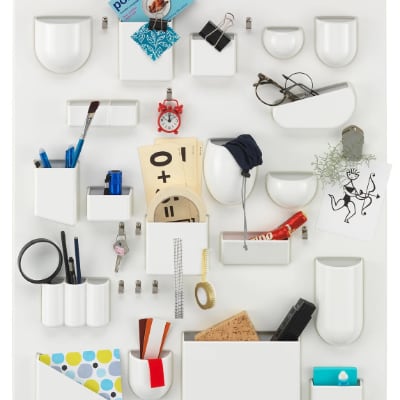
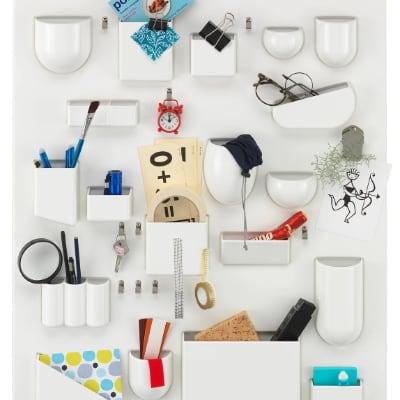
Uten.Silo takes what's usually in a junk drawer and puts it on the wall where you can see it: a molded plastic panel of pockets, hooks and clips. Dorothee Becker based it on a wooden toy she designed for her children. It premiered at the Frankfurt fair in 1969 and went out of production when the 1970s oil crisis pushed up the price of plastic. In 1976 she opened a shop in Munich called Utensilo, and ran it until 1989. Vitra rediscovered Uten.Silo in the late 1990s and brought it back. It was her only commercially successful design.
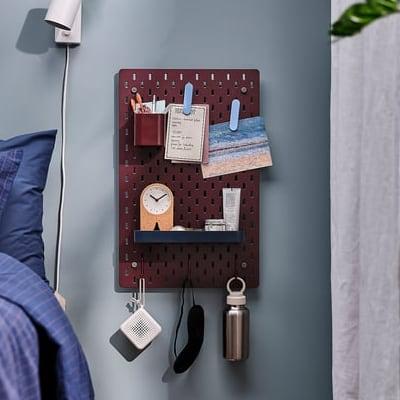
For a lot less than a Uten.Silo, a designer named Simone Tomaselli made 13 Uten.Silo-style pockets that clip onto IKEA's Skådis pegboard and gave away the 3D-print files.
The Eames Hang-It-All does for a kid's floor what Uten.Silo does for the junk drawer. It came out in 1953 from Tigrett, the toy company that also sold the Eames House of Cards, and it was meant "for children, to hang up all their belongings," on colored wooden balls at the ends of bent steel wire.
The toys and the tree
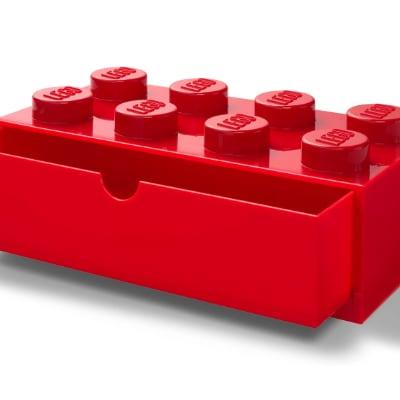
The LEGO storage brick is a giant red 2x4 brick with drawers in the front, made by Room Copenhagen under license from the LEGO Group. The TreeKeeper bag stores an artificial tree up to 9 feet tall upright and still decorated, on a rolling stand that replaces the tree stand.
Shelves for ordinary homes
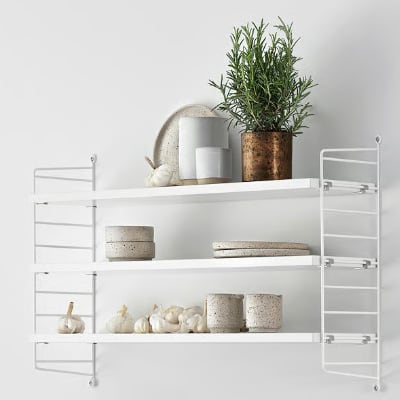
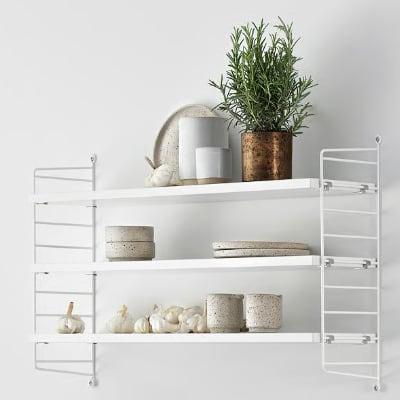
In 1949 the Swedish publisher Bonnier was starting a book club, and it had a problem. As Homes & Antiques puts it, "rich folk can build shelving, but to sustain sales they need a bookshelf for the people." Bonnier held a contest for a cheap one, and 192 architects entered. Nils and Kajsa Strinning won with String: shelves hung on the wall between two thin wire ladders. The whole thing could be packed flat for shipping. The wire came from a dish rack. Nils had been asked to dry the dishes, thought towels were "unclean," and made a metal dish rack dipped in plastic instead, according to String's CEO, Peter Erlandsson. Production stopped in 1974, and Erlandsson brought it back in 2005.
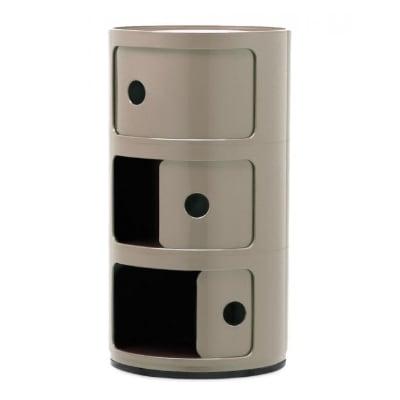
Anna Castelli Ferrieri, one of the first women to graduate from the Milan Polytechnic, designed Componibili for Kartell, the plastics company her husband had founded. It debuted at the Milan furniture fair in 1967 under the name "Mobili 4970/84." The round modules stack without screws or pins, and each has a sliding door. MoMA showed it in 1972. "These stacking storage units on wheels have made it possible for everyone to change their living space," she said in 1986. String and Componibili were both meant for everyone's house, not just a designer's, and both are still made.
The man canning is named after
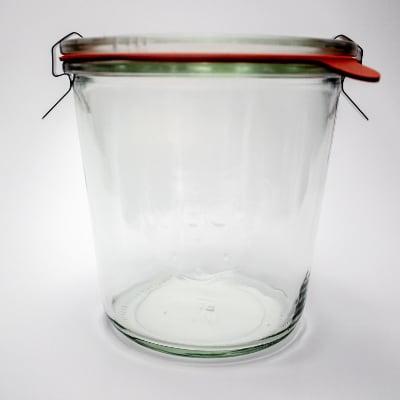
Germans call home canning Ein-Wecken, after Johann Weck, who left J. Weck & Co. in 1902, two years after he co-founded it. The jar wasn't his invention. Dr. Rudolf Rempel had patented a jar sealed with a rubber ring and a metal lid in 1892. Weck's partner, Georg van Eyck, made the jars famous with demonstrations around Germany and added the strawberry trademark that's still on them. The company filed for insolvency in the summer of 2023, and investors bought it and kept the strawberry jars in production.
A kitchen table full of holes
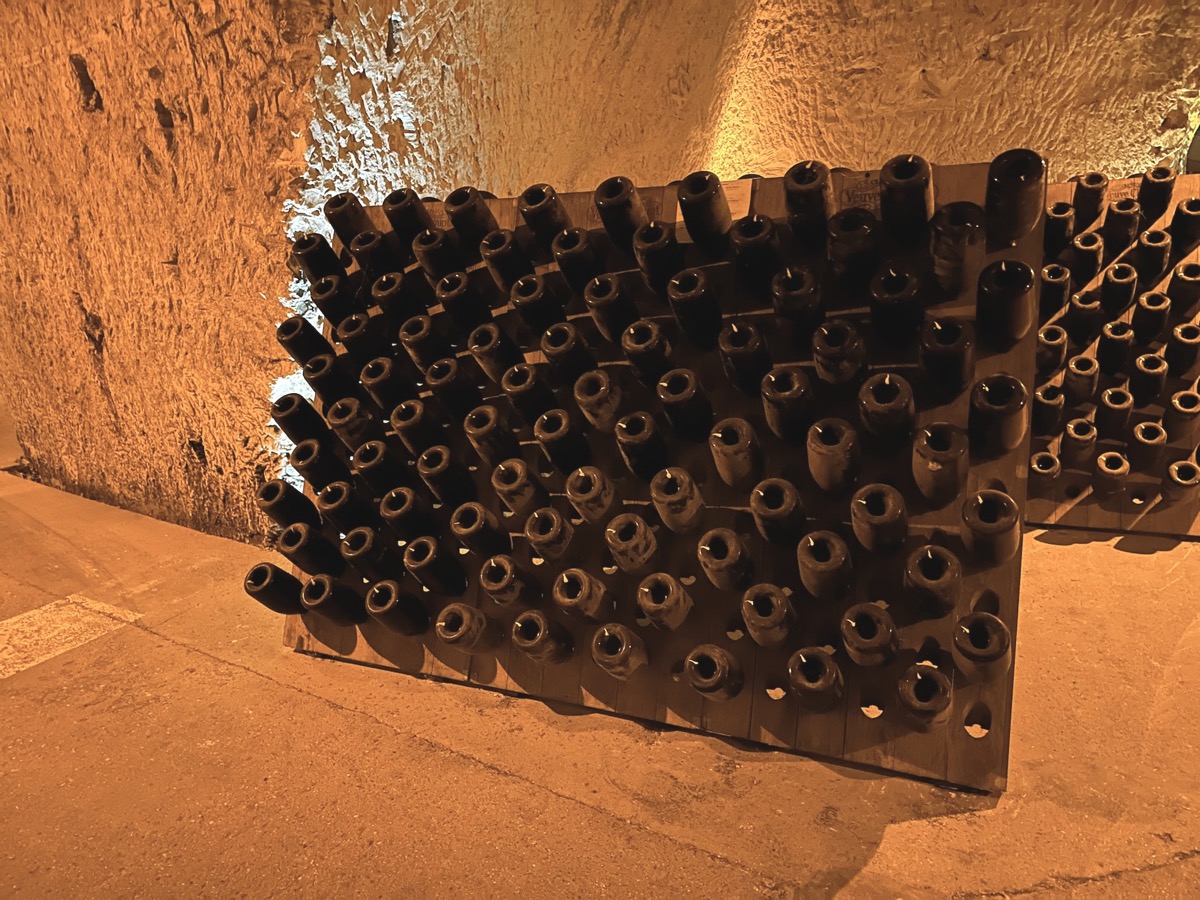
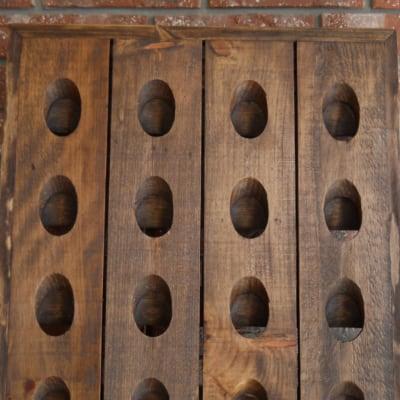
Riddling racks in the Veuve Clicquot cellars in Reims. Photo by Cynwolfe, Wikimedia Commons, CC BY-SA 4.0

Champagne leaves dead yeast in the bottle, and the sediment has to slide into the neck so it can be taken out. The story goes that in 1818, prompted by an employee named Antoine Muller, Madame Clicquot had holes drilled at an angle in a kitchen table so the bottles could stand neck down and be turned a little each day. The rack that came out of it, the pupitre, is an A-frame board with 60 holes at 45 degrees. By hand, a skilled riddler could turn 40,000 bottles a day, and the best of them nearly twice that. Most champagne houses use machines for the job now, which is why the wooden racks turn up secondhand, some still stamped with a champagne house's name.
A free chest with a catch
From 1925 to 2004, Lane gave out about 27 million miniature cedar chests through its Girl Graduate Plan. At the peak, Lane estimated that half to two-thirds of graduating girls were offered one. A graduate picked hers up at the local Lane dealer, who also offered a discount on a full-size hope chest. The reason: Lane knew that half the graduates "would be married and setting up a household" within eighteen months. The miniatures sell online now for about $25, or a couple of dollars at garage sales.
The full-size chests the miniatures were meant to sell are a different story. The CPSC says 12 million Lane and Virginia Maid cedar chests made between 1912 and 1987 have lids that lock on their own when shut, and 14 children have suffocated inside them. Replacement latches aren't available anymore, so the advice for anyone with an old full-size chest is to remove the latch and lock.
A staircase that stopped hiding
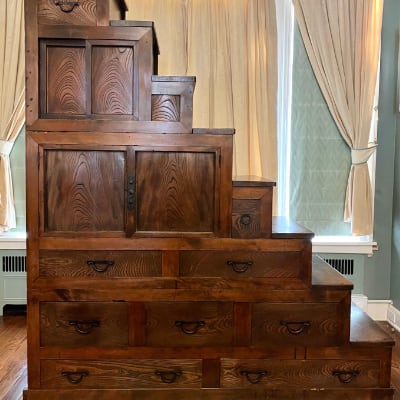
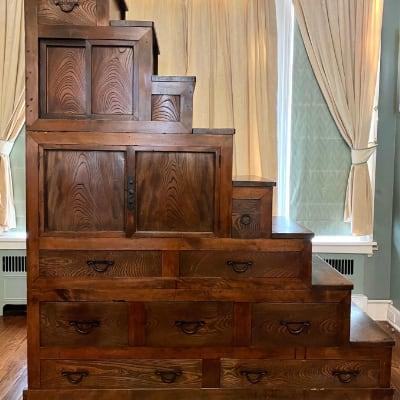
A kaidan-dansu is a freestanding staircase with drawers and cupboards built under the steps. They come from the machiya, the merchant houses of Edo-era Japan, which were only about 6 meters wide and 20 meters deep, according to a newsletter from Dentsdelion Antiques in Tokyo. The treads are usually about 60 cm wide, so the space underneath holds a lot. In a house that narrow, storing as much as possible was probably the first reason for them.
Merchants were at the bottom of the social order, and sumptuary laws discouraged them from showing wealth, so the staircases were sometimes kept behind sliding doors, out of sight. One theory says that was to hide a second floor from tax collectors, but the newsletter says there's no evidence for it, and second floors were never banned. Not every staircase was hidden, though. Some houses had two: a plain one in the back, more like a stepladder, and a nicer one in the living area that customers could see.
After the Meiji Restoration ended the sumptuary laws, cabinetmakers started building them in better wood with more decoration, and kaidan-dansu became a symbol of status. For anyone shopping for one, the newsletter says reproductions never use the original woods (cedar and cypress for the steps and frame, keyaki for the drawers and doors) and often aren't built to be climbed.
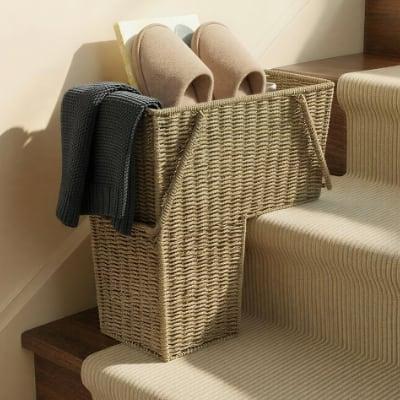
For stairs that are already built, the Household Essentials stair basket puts the storage on the steps instead of under them. It's a woven seagrass basket shaped like an L, so it sits across two steps, with a handle on each side for carrying it up.
Someday
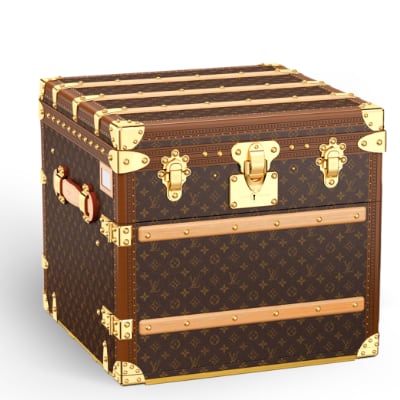
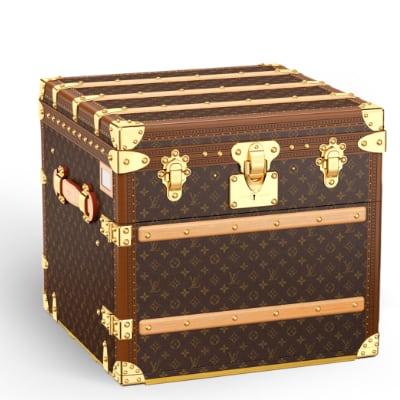
Before Louis Vuitton, trunks had rounded lids, to help the rain run off. That meant they couldn't be stacked. In 1858 Vuitton designed a flat-topped trunk covered in a lightweight waterproof canvas of his own invention, so the trunks could be stacked aboard trains and steamships. A new Courrier trunk from Louis Vuitton is listed at $45,000. A vintage Malle Courrier 80 sold through Sotheby's for $3,584.
In 1886 the company came out with a tumbler lock with two springs. Each lock has a number Vuitton recorded, so a lost key could be replaced. Georges Vuitton, Louis's son, challenged Harry Houdini to escape from a trunk that had one, and Houdini didn't take him up on it. That story is told by Louis Vuitton and by the auction houses and magazines that write about its trunks, and none of them cites a newspaper report from the time.
In conclusion
Giertz, Rainaldi and Becker made the pile part of the design on purpose. The Shakers and Julia Child were only keeping a room working, and the Edo merchants were keeping their stairs out of sight. Even so, a Shaker chair sold for $88,000, Child's kitchen went to the Smithsonian and the staircase chests became a status symbol. Copy the list above into a new WishPoster list with the Corkboard theme, or start one from scratch with your own pile in mind.
Ready to make your own wishlist?