A gnome lover's wishlist, and the 99-year-old rule against gnomes

In 1927, the Royal Horticultural Society banned gnomes from the tents at the Chelsea Flower Show, with a rule that "no statuary or other sundries may be exhibited in the tents, either alone, or as a part of an exhibit." A lot of people have tried to get rid of gnomes, before and since, and the gnomes keep coming back.
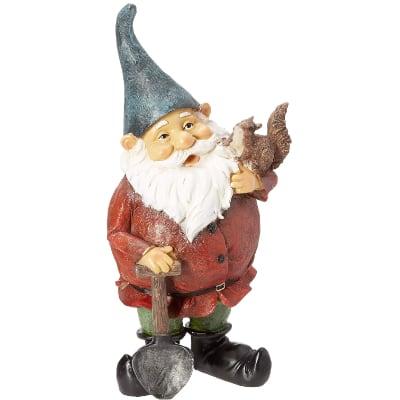
This wishlist is for someone who likes gnomes, in the garden, on the bookshelf or at Christmas. It has two garden gnomes (one polite, one not), three books, a movie, a Swedish wool tomte, a designer stool, socks and admission to see a 15-foot gnome in Iowa. The listed prices run from $8.99 for The Tomten to $615 for the Philippe Starck stool.
The list below is in Gnome Garden, a WishPoster theme made to go with this post. The title sits in a dusk sky above a dark hedge and a flower bed of daisies, tulips, foxgloves and red toadstools, and four garden gnomes in tall red hats stand on the lawn: one holds up a lantern that flickers, one leans on a spade, one waves now and then, and one hides behind a bush and pops up to peek. Fireflies blink over the hedge, and on a wishlist page, petals drift down behind the items. Any wishlist can use it, free and with no sign-up. Start a new list in Gnome Garden, or switch a list you already have to it in the theme picker. Taking this whole list starts it in Gnome Garden too. Pick the items you want with "Add to wishlist," or take the whole list with the button at the bottom:

- Secrets of the Gnomes by Wil Huygen and Rien PoortvlietThe sequel, the 2025 hardcover.

- A visit to Elwood at Reiman Gardens, Ames, IowaAnd the new baby gnome next to him.$12
Some links above earn WishPoster a commission. As an Amazon Associate, WishPoster earns from qualifying purchases.
The gnome that was hidden from the daughters
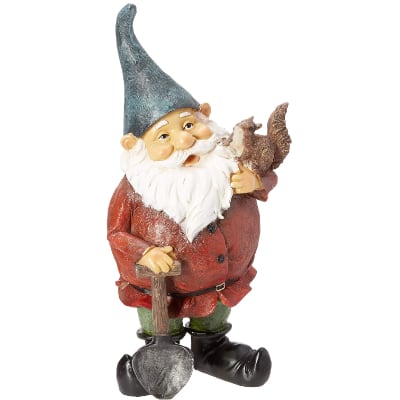
England's first garden gnomes barely outlasted the man who bought them. Sir Charles Isham started a rockery at Lamport Hall, his estate in Northamptonshire, around 1847 by most accounts, and put every single stone of it into place himself. Its grottos and crevices looked like miniature mines. In Nuremberg he'd seen mines decorated with small terracotta gnomes wielding tiny picks and shovels. He came home with several dozen of them, or 21, by another count. Isham was a spiritualist, and he set them out "in the hopes that they would attract real gnomes to his garden." By one account, some of his gnomes worked the mines and some "were on strike for better working conditions for gnomes." The classic garden gnome still carries a miner's tool, like Digger on this list.
Isham died in 1903. His daughters hated the gnomes and removed them, and according to legend, they shot at them with air rifles. One survived, hidden in the rockery. That's Lampy, just under 6 inches tall, with a spade about the size of a toothpick. In 2013 he was insured for a million pounds, and he's on guarded display at Lamport today.
Even the 1847 date is in question. Lamport Hall's own site says the rockery was populated with gnomes "around 1874," and another account says 1857. The Linda Hall Library, which tells the story of the daughters too, says "everything about Isham and his gnomes seems to be based on hearsay."
Why Chelsea kept them out
The 1927 rule was about statues in the tents. It was later extended to all of Chelsea's gardens, with gnomes named specifically, and that's how a rule about statuary became the gnome ban. National Geographic wrote in 2013 that the show had rigorously excluded gnomes since it began, in 1913, 14 years before the RHS's date. Either way, the RHS hasn't said why it kept them out.
What had happened to gnomes by 1927 is clearer. "Back in the 19th century they were expensive pieces of garden art that only wealthier people could afford," the garden historian Twigs Way told National Geographic. Sir Charles Isham, bringing terracotta gnomes home from Nuremberg, was that kind of buyer. Way also said that "for many of us, garden gnomes epitomize the great social divide on garden design." After World War I, gnomes fell badly out of favor in England because they were German. They came back anyway in the 1930s, when Walt Disney made them popular again with Snow White and the Seven Dwarfs.
Gnomes a judge ordered removed
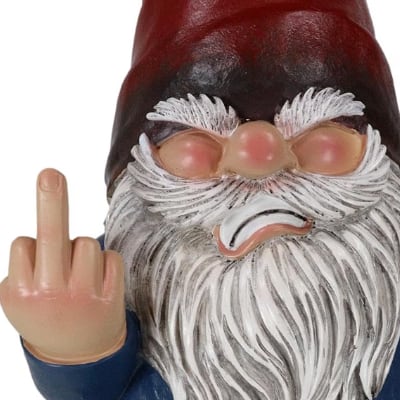
A German court once had to rule on gnomes, and it ruled against them. In 1994, in Grünstadt, two neighbors were already fighting about noise when one of them set out about a dozen "Frustzwerge," or frustration gnomes. He'd made the clay figures himself, 30 to 35 centimeters tall, raising a middle finger, baring a bottom or sticking out a tongue. He said they were for his own enjoyment. The court didn't believe him. It found he could barely see the gardens from his flat, so the gnomes weren't there for him to enjoy. He couldn't provoke his neighbor around the clock himself, so he'd had the gnomes take over the job, using his "undoubtedly present artistic talent" solely to upset the man next door. The gnomes had to go.
The Go Away gnome on this list is the same idea, sold as a "garden greeter": 13 inches of resin, flipping the bird.
An illegal meeting of dwarfs
The police in communist-era Wrocław, Poland, painted over anti-government slogans, which left blotches on the walls. On the night of August 30, 1982, Waldemar Fydrych and Wiesław Cupała painted a dwarf on one, and their movement, the Orange Alternative, kept painting them. Fydrych, detained at a police station, explained it as a parody of Marxist dialectics: "The Thesis is the Anti-Regime Slogan. The Anti-thesis is the Spot and the Synthesis is the Dwarf." On June 1, 1988, more than 10,000 people marched through the center of Wrocław in orange dwarf hats. Fydrych's question about all of it: "Can you treat a police officer seriously, when he is asking you: 'Why did you participate in an illegal meeting of dwarfs?'"
In August 2005, the city itself put up its first five little dwarf statues, and around 1,040 stand around Wrocław now. Fydrych had said the rest of it in that police station: "Quantity evolves into Quality. The more Dwarves there are, the better it is."
We serve merely as pretty decoration

The travelling gnome started as a joke in the 1970s, when Henry Sunderland photographed his own garden gnomes, Harry and Charlie, on his travels around Antarctica. In France, it turned into a cause. The Garden Gnome Liberation Front was formed in 1997 in Alençon, and that same year it was fined for the disappearance of some 150 gnomes. The next summer, eleven gnomes were found hanged under a bridge in Briey, in eastern France, in what police said appeared to be a mass suicide. It was attributed to the Front, and a letter found nearby said: "When you read these few words we will no longer be part of your selfish world, where we serve merely as pretty decoration."
In 2000, the Bagatelle gardens in Paris put on an exhibit of 2,000 gnomes, and 20 of them were stolen in a raid at night. The Front said it would strike again unless the exhibit closed and all the gnomes were released, asking "that garden gnomes are no longer ridiculed and that they be released into their natural habitat."
Amélie put a gentler version on screen the next year. To get her father to travel, Amélie steals his garden gnome and has a flight attendant friend send pictures of it from all over the world.
The field guide to a species that doesn't exist
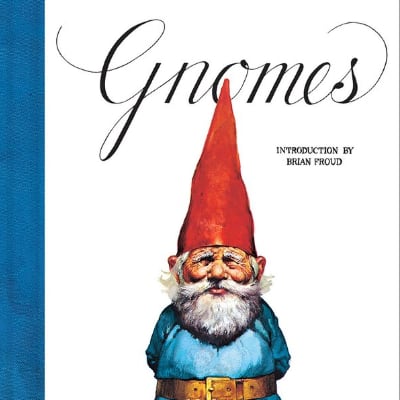
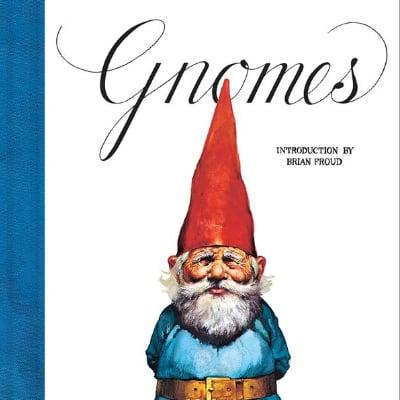
In 1977, a natural history of gnomes, written by a Dutch general practitioner, made the national nonfiction bestseller lists three weeks after publication and stayed there for 62 weeks. Abrams had put 40,000 copies on the market in the fall, and by the next spring it had sold 250,000. Wil Huygen, the doctor, wrote Gnomes and Rien Poortvliet drew it, and it reads like a field guide: gnomes can live upwards of 400 years, and, as Time reported, "gnomes always have twins."
It turned into a business, too. Gnome calendars sold 625,000 copies in 1977, and Abrams licensed the gnomes for clothing, figurines and wall clocks, with Snoopy as its main competition. The spinoffs pulled in almost $10 million in the US. One of them was a Spanish cartoon, The World of David the Gnome, from 1985. The book is still in print: Abrams reissued it in 2023, with an introduction by Brian Froud, and its sequel, Secrets of the Gnomes, in 2025.
The tomte works for porridge
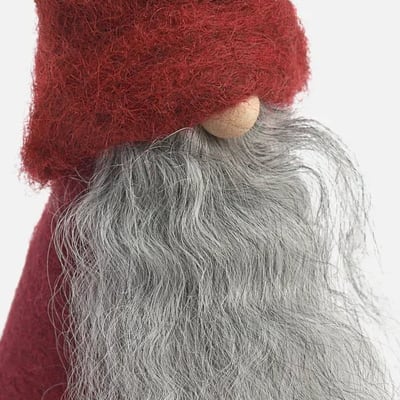
The Scandinavian tomte is a different tradition from the garden gnome, though both wear red caps. In Norway he's the nisse, who looks after the farm, and it's a tradition to bring him a bowl of rice porridge in the barn on Christmas Eve. If he doesn't get it, he may get up to mischief, like leaving the barn door wide open. An older folk tale is less forgiving. When a farmer hides the butter under the porridge, the nisse kills the cow in a rage, then finds the butter and replaces the cow with one from another farm.
The tomte got the job he's known for now from a Swedish illustrator who needed the work. Jenny Nyström's husband was in poor health and never finished his studies, so she supported the family. She came up with the idea of the tomte, rather than the Christmas goat, bringing children their presents. Under a 1911 contract she had to produce a certain number of watercolors each month, and over her life she painted between 6,000 and 7,000 tomtes.
Nyström also drew the illustration for the first printing of Viktor Rydberg's 1881 poem "Tomten." Astrid Lindgren made the poem into the picture book The Tomten in 1960, and for the editions in other languages she wrote new text and left out the poem's metaphysical content.
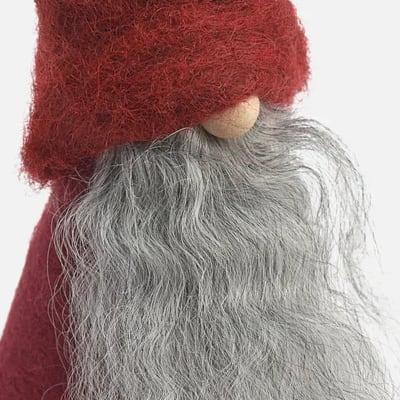
The wool tomte on this list comes from Åsas Tomtebod, which Åsa Götander started in 1993 at her kitchen sink in Småland.
A gnome to put a drink on
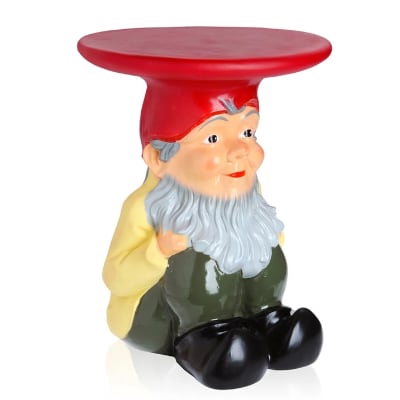
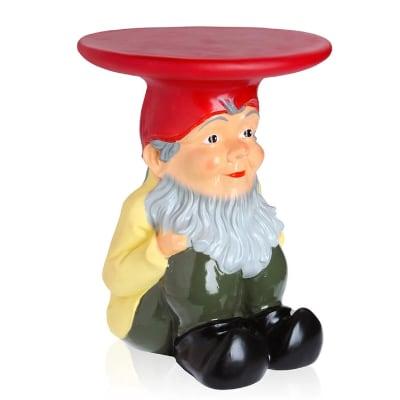
Philippe Starck brought the gnome indoors as furniture. He designed three gnomes for Kartell, named Attila, Napoleon and Saint-Esprit. Each one's hat is flat and round, ideal for use as an occasional table or stool. The Centre Pompidou in Paris has an Attila in its collection, dated 1999 and given by Kartell in 2003.
The biggest one
Reiman Gardens in Ames, Iowa, has Elwood, a 15-foot gnome it bills as the world's largest concrete gnome. In 2026 it added a four-foot baby concrete gnome next to him, and held a "Gname the Gnome" contest to name the baby. The gardens are open daily from 9 to 5 with a few closures, including Thanksgiving and Christmas Eve.
In conclusion
In May 2026, the RHS lifted its 1927 rule for a few celebrity gnomes, the first time since the show's centenary in 2013. They celebrated Highgrove, the King's garden in Gloucestershire, "where a gnome is often to be found in the Stumpery." Copy this list for the gnome lover in your life, or start your own in the Gnome Garden theme.
Ready to make your own wishlist?