A 2026 gift guide for the kid who builds traps like Kevin McCallister
It's Thanksgiving night as I write this, and at our house that means the tree is going up and Home Alone is on. We watch it this weekend every year because it gets us in the Christmas spirit. Nielsen says Home Alone was the most-watched holiday movie in three of the last four Decembers. The movie began as a list. John Hughes was packing for a family trip and making a list of everything he didn't want to forget when he wondered what his 10-year-old son would do if they left him at home.
This wishlist is for kids about 8 and up who watch Kevin McCallister and start drawing trap plans, and for grown-ups who still want to set up the Mouse Trap game. It has three games, a marble run, a mousetrap car kit, an engineering subscription box, the LEGO version of the McCallister house, two books and a team entry in a real contest for over-complicated machines. The listed prices run from $15 for KerPlunk to about $260 for the LEGO house, which LEGO no longer makes. A year of CrunchLabs boxes costs more than the house.
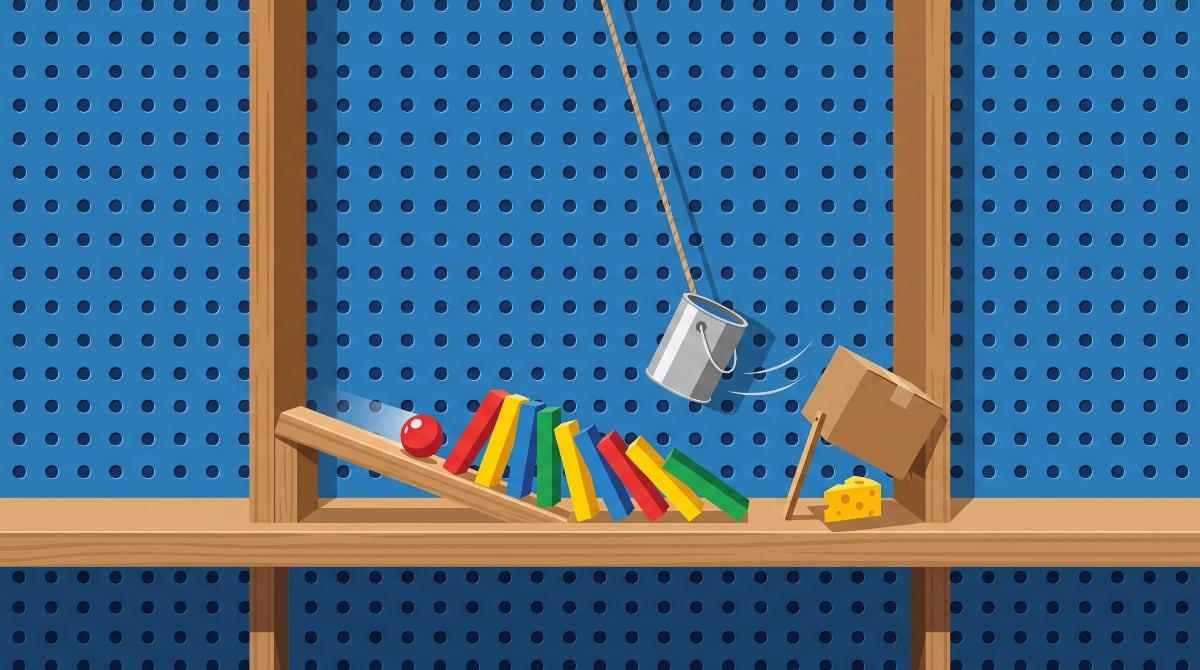
The list below is in Chain Reaction, a WishPoster theme made to go with this post. The title sits on a blue pegboard wall above a wooden shelf. On the left, a red marble rolls down three wooden ramps onto the shelf and knocks over a row of colored dominoes that runs under the title. On the right, the last domino tips a block that was holding back a paint can on a rope. The can swings into the stick propping up a cardboard box, and the box drops over a wedge of cheese. Then the dominoes stand back up and it all starts again. Two gears turn in the corner, and on a wishlist page, marbles drop down the page behind the items. Any wishlist can use it, free and with no sign-up. Start a new list in Chain Reaction, or switch a list you already have to it in the theme picker. Taking this whole list starts it in Chain Reaction too. Pick the items you want with "Add to wishlist," or take the whole list with the button at the bottom:
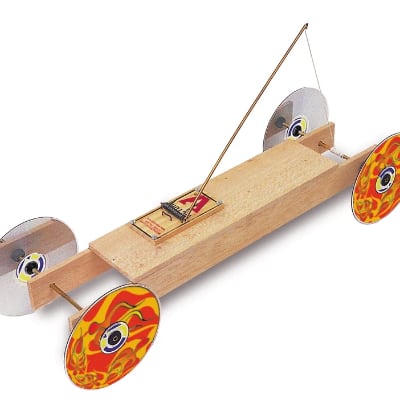
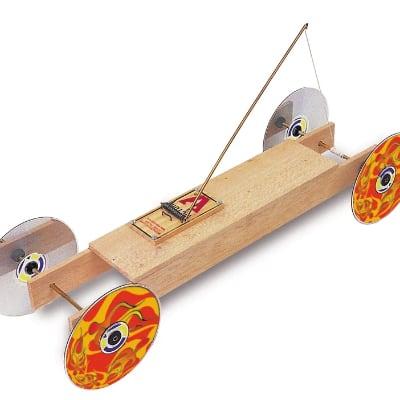 Pitsco Basic Mousetrap Vehicle kitNeeds white glue and a drill, so a grown-up helps.$20.75
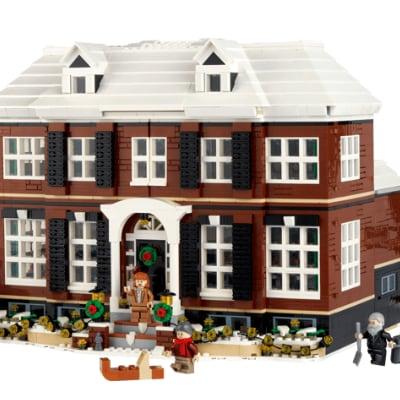 LEGO Ideas Home Alone (21330)It's retired, so a sealed one from a reseller.$260
- The Art of Rube Goldberg
- A team entry in the Rube Goldberg Machine ContestWith my club or homeschool group.$100
Some links above earn WishPoster a commission. As an Amazon Associate, WishPoster earns from qualifying purchases.
Kevin's battle plan
Kevin's battle plan, the hand-drawn map of the house with every trap marked on it, was made by the production designer, John Muto. To make it look like a kid had drawn it, he used his left hand, though he's right-handed, and he misspelled "ornaments" on purpose.
I drew one of those as a kid. A friend and I made a fort out of three trees on some land near our neighborhood, and we sketched out how to defend it from raiders. The plan was mostly more sticks, and a rock tied to a rope that we threw over a limb so it would swing down.
Our rock on a rope was the same idea as Kevin's paint cans, but the movie's traps were planned like stunts. Chris Columbus, the director, drew the storyboards himself, and the nail Marv steps on was spring-loaded so it would pull back instead of going into his foot. Kevin's versions weren't softened like that. An emergency doctor at Weill Cornell later went through the burglars' injuries and said the paint can alone was "easily enough to fracture multiple facial bones." The traps only work in cartoons, and that's where the idea came from. The cinematographer, Julio Macat, said they looked at the Road Runner cartoons, and they "talked about the Rube Goldberg-type of cartoons, which can be seen in the traps that Kevin sets."
The engineer who drew machines
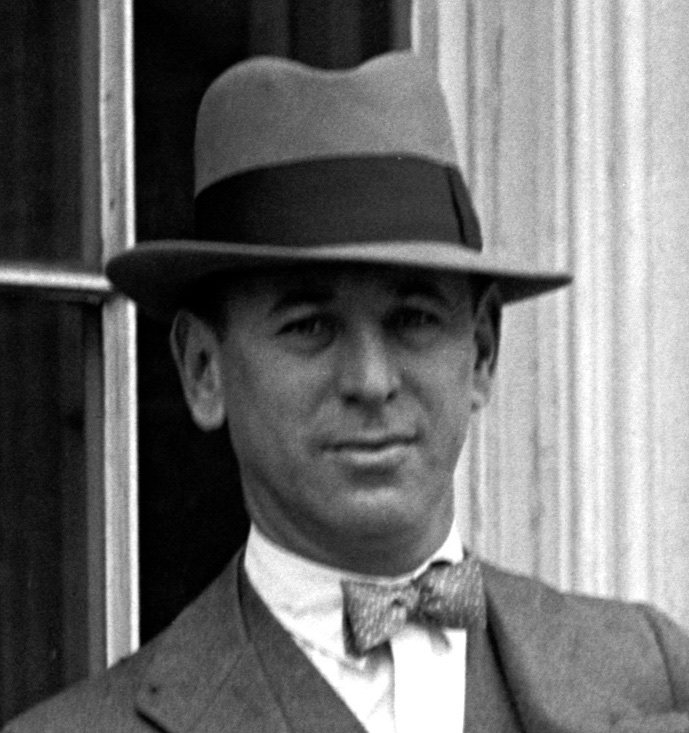
Rube Goldberg in 1929. Photo by the National Photo Company, Library of Congress via Wikimedia Commons, no known copyright restrictions

Before he drew machines, Rube Goldberg mapped sewer pipes and water mains for San Francisco, with an engineering degree from the University of California that he'd earned at his father's insistence. Then he quit to draw cartoons. From 1929 to 1931 he drew the inventions of Professor Lucifer Gorgonzola Butts: machines of strings, pulleys, birds and boots that took a dozen steps to do a job like wiping your mouth with a napkin. The Lemelson-MIT program describes them as making fun of "man's capacity for exerting maximum effort to accomplish minimum results," and notes that they all do work, "some, weather permitting."
The joke stuck to him. Merriam-Webster lists "Rube Goldberg" as an adjective for doing something simple in a complicated way. Cartoonists honor him for the drawings themselves: the National Cartoonists Society's top award, the Reuben, is named after him. The cartoons are collected in The Art of Rube Goldberg, edited by his granddaughter, Jennifer George.
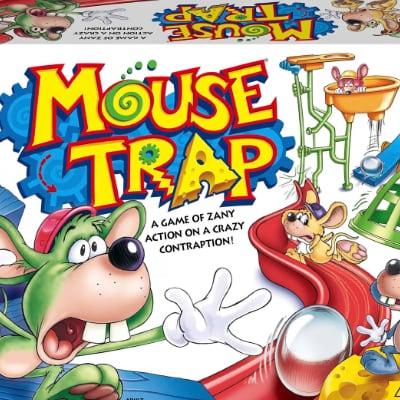
Mouse Trap
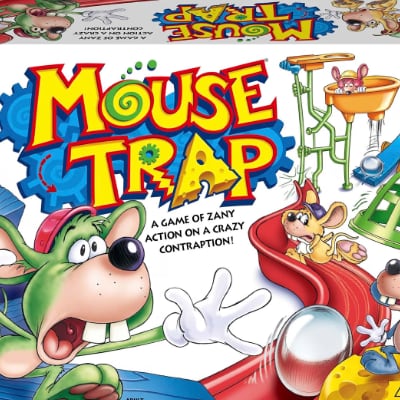
I never had Mouse Trap as a kid. When I visited a house that had it, I was so envious I insisted we play it. Mostly that meant skipping the game and just putting the trap together.
The game was built around the trap from the start. Marvin Glass, a Chicago toy designer, wanted a three-dimensional board game inspired by Goldberg that could be built up off the board. Who did the designing depends on who you ask: the patent names Glass and Gordon Barlow, Mental Floss credits Barlow and Burt Meyer, and the Victoria and Albert Museum in London credits Ideal's Hank Kramer. Milton Bradley's president turned it down as "a lot of plastic junk," and Parker Brothers passed too. Ideal took it and sold 1.2 million copies in 1963 alone. The V&A now has a 1970 copy in its collection, and its catalog says the trap often malfunctions, which players count as part of the charm.
Goldberg's syndicate asked Glass for a royalty, and Glass said no. Goldberg was 80 and about to retire, and a legal fight didn't appeal to him, so he never saw a dime from Mouse Trap. He later licensed his name for a line of playsets from another company, and Glass made more Goldberg-style games, but none of them sold like Mouse Trap.
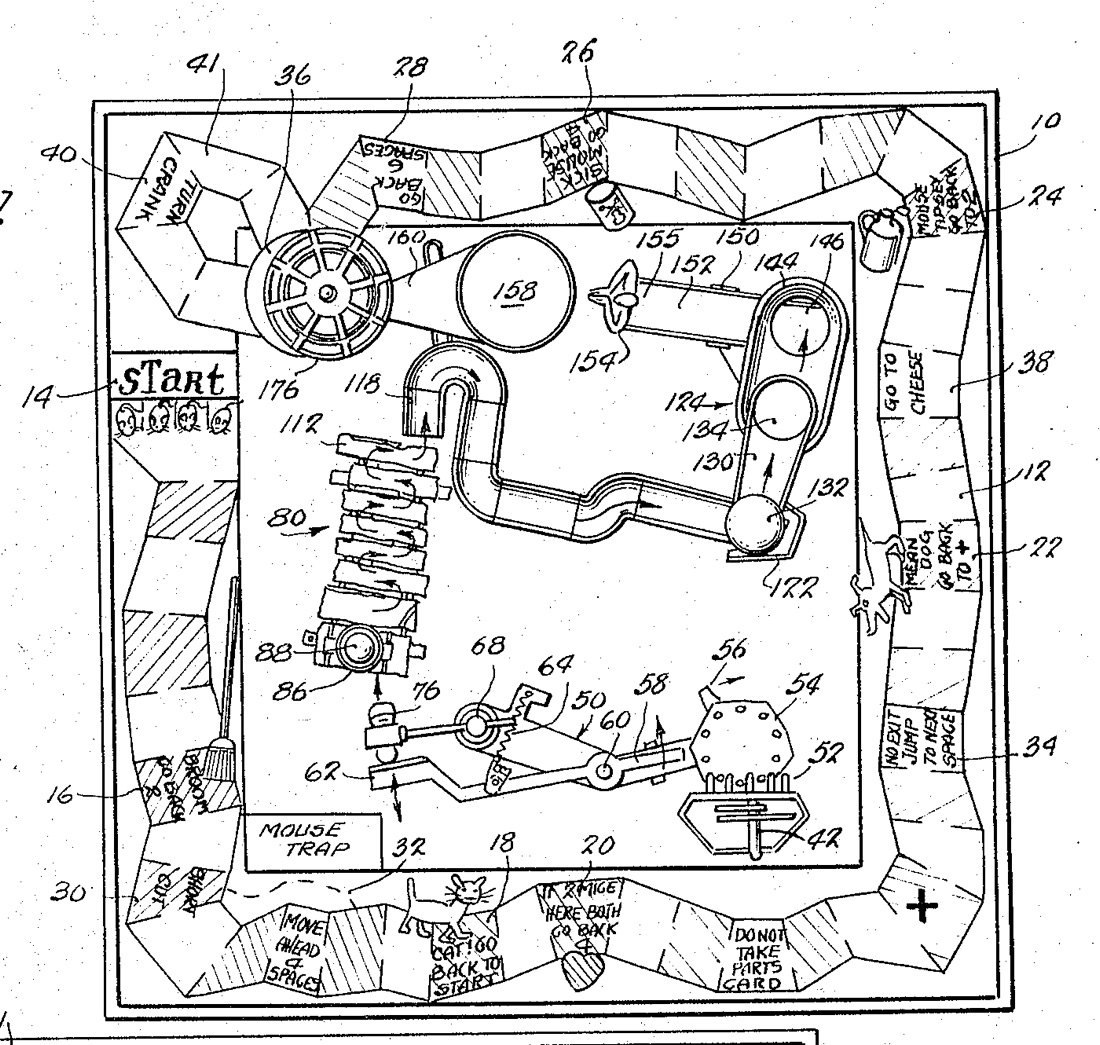
The Mouse Trap board from Marvin Glass and Gordon Barlow's patent, US 3,298,692, granted in 1967. US patents are public domain.
KerPlunk
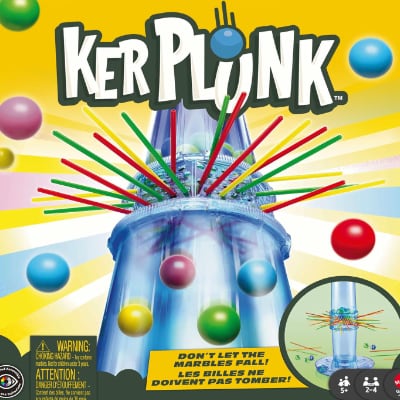
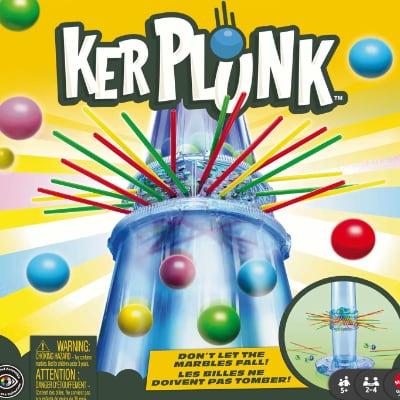
Marvin Glass turns up in KerPlunk's story too. Eddy Goldfarb, who made KerPlunk, spent World War II in the radio room of the submarine USS Batfish, filling a small notebook with toy ideas under a 40-watt bulb. After the war, Glass sold one of Goldfarb's first ideas to a novelty company for $2,500, and Goldfarb got $900 of it. For the rest of his career, Goldfarb licensed his inventions for royalties instead of selling them. He earned nearly 300 patents, and in 1967 he and Rene Soriano made KerPlunk for Ideal, the company that took Mouse Trap. It's named for the sound the marbles make when they drop to the bottom of the tube. Goldfarb turned 105 in September.
Pop-Up Pirate
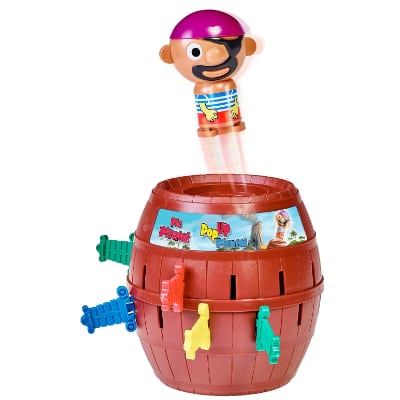
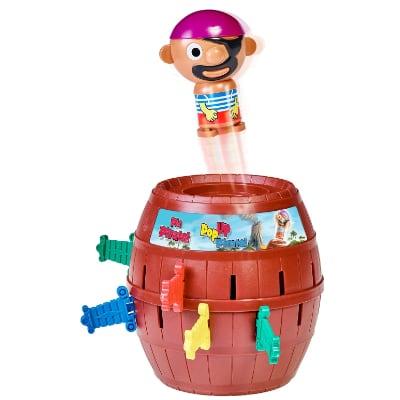
When Tomy released Pop-Up Pirate in Japan in 1975, the player who popped the pirate out of the barrel won, because they'd rescued him. By 1995 the official rule was that popping him out meant you lost. For the game's 50th anniversary, the 2025 Japanese edition switched back to winning.
A better mousetrap
The mousetrap is the most invented machine in American history, with more than 4,400 patents since 1838, most of them to amateurs. The Patent Office doesn't require an invention to be practical, and plenty of them weren't: one was a four-inch tricycle a mouse powered by running in a wheel, and a 1911 trap built like a two-story house electrocuted the mice that went in. Fewer than two dozen ever made their inventors money. Buyers kept the snap trap John Mast of Lititz, Pennsylvania, came up with in 1899, which sold for five cents. Woodstream still makes it there as the Victor, and it outsells all other American mousetraps combined, about two to one.
Physics teachers found another use for Mast's spring. A mousetrap car runs on nothing but the trap: a string from the trap's arm is wound around the back axle, and when the arm snaps down, it spins the wheels. Pitsco, which sells kits to schools, makes a basic one for grades 6 to 12.
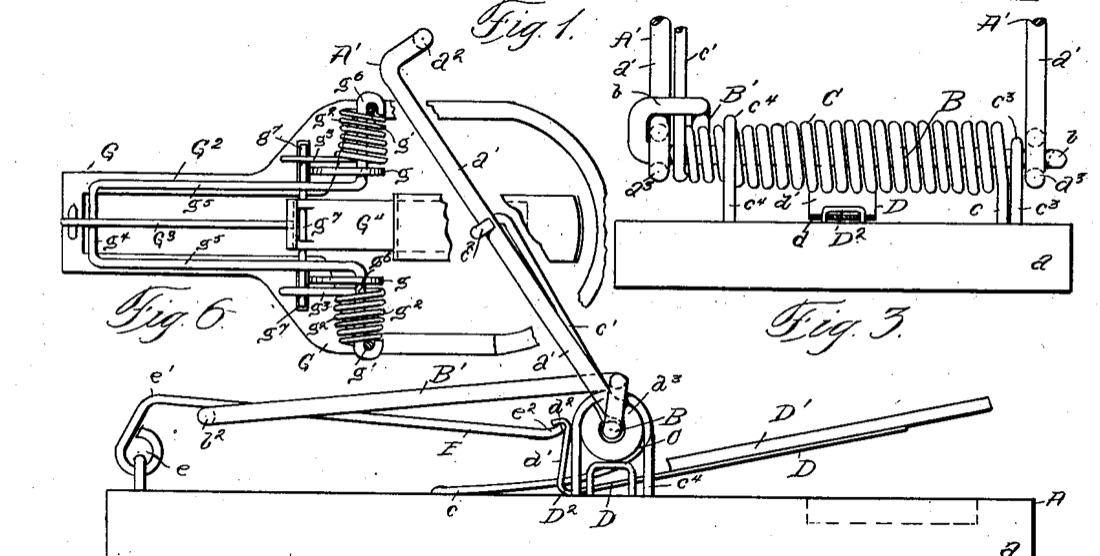
John Mast's snap mousetrap, from his patent, US 744,379, granted in 1903. US patents are public domain.
Mark Rober's glitter bomb
In 2018, Mark Rober, a former NASA engineer who worked on the Curiosity rover, got tired of packages being stolen from his porch. He spent six months building a decoy package that covered the thief in glitter and fart spray. It was rigged with several phones to film the reaction. It was a Kevin McCallister trap aimed at a porch thief instead of two burglars. Part of the video he posted turned out to be staged: a friend of a friend had borrowed the device and recruited people to pose as thieves. Rober cut about 90 seconds and said he should have done more to check.
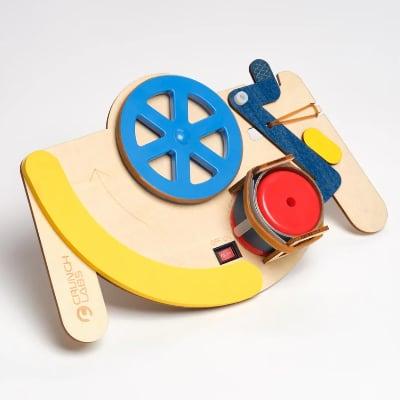
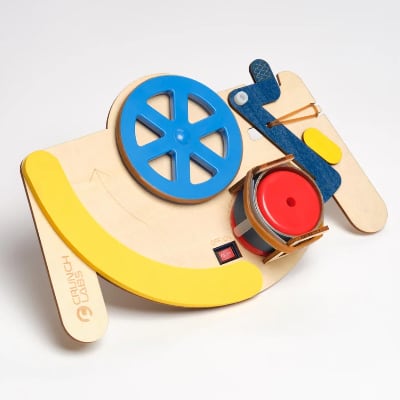
His company, CrunchLabs, sends a Build Box each month with a toy to put together, for ages 8 to 13. A gift subscription is set up by the number of boxes.
The McCallister house in LEGO
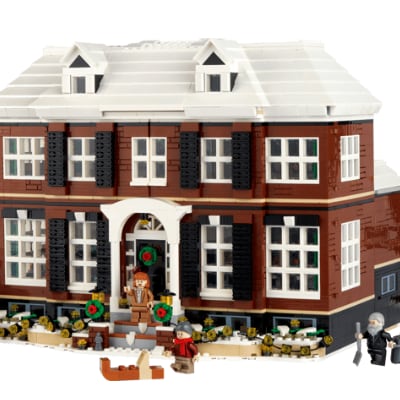
The LEGO Home Alone house comes in 24 build bags that follow the movie's story. That's a bag a day from December 1 to Christmas Eve, like an advent calendar. The set comes with the paint cans, Buzz's pet tarantula, the zip line to the treehouse and Marv and Harry's van. At 3,955 pieces, it's the largest set LEGO has made from a LEGO Ideas design, which came from Alex Storozhuk, a 28-year-old fan in Ukraine. LEGO retired it at the end of 2025, so sealed ones come from resellers now.
The Rube Goldberg Machine Contest
The contest named after Rube Goldberg started at Purdue in 1949 as a competition between two engineering fraternities. Today it has divisions for elementary, middle and high school, plus adults. Teams have 1 to 15 members and a coach, and homeschool teams are welcome. Registration is $100 a team, with a limited number of scholarships. Every machine in a given year has to do the same simple job. Recent ones were putting toothpaste on a toothbrush, feeding a pet and opening a box.
Kids don't need a contest to start. In 2012, when he was 7, Audri Clemmons and his mom filmed Audri's Rube Goldberg Monster Trap, a machine he built to catch monsters. He'd built his first machine at 5 and filmed every attempt. The idea came from OK Go's "This Too Shall Pass" video, which shows a machine filling a two-story warehouse and took about 60 takes. LEGO fans build them too, in a form called the Great Ball Contraption: each builder makes a module that takes balls in one side and passes them out the other, and the modules are chained together.
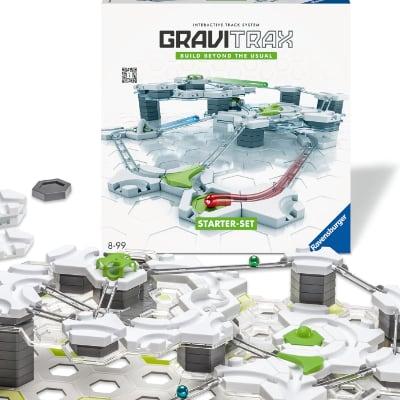
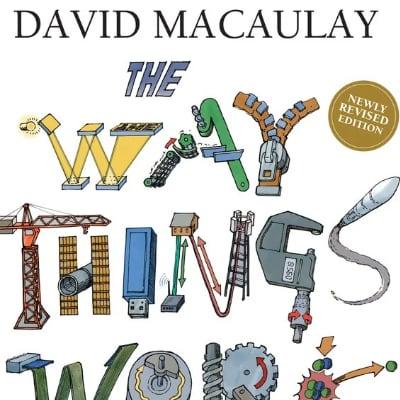
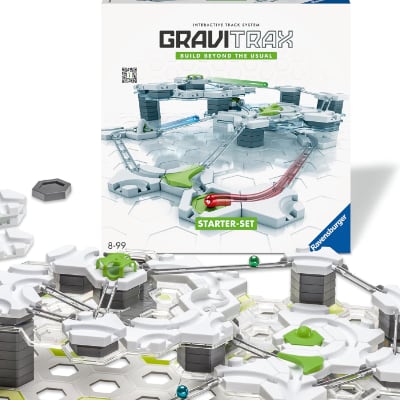
For practice at home, GraviTrax is a marble run system from Ravensburger where the builder lays out the course with tiles, rails and height pieces. For the levers and pulleys inside a machine like that, The Way Things Work Now is David Macaulay's book on how machines work, from levers to computers, explained with woolly mammoths.
In conclusion
The contest holds kids to Goldberg's joke about maximum effort for minimum results. Depending on age, a machine has to use 10 to 75 steps and finish within two minutes, and in 2027, all of that will go into flipping a switch. If you know a kid who draws trap plans, start a list in Chain Reaction, or take this one and add to it. Happy Thanksgiving.
Ready to make your own wishlist?